Welcome to the Hidden Wiki
The Hidden Wiki has been helping people discover onion websites and dark web resources since its early versions appeared in the late 2000s. Today, Hidden.wiki offers a collection of links, Tor resources, and information about exploring the dark web.
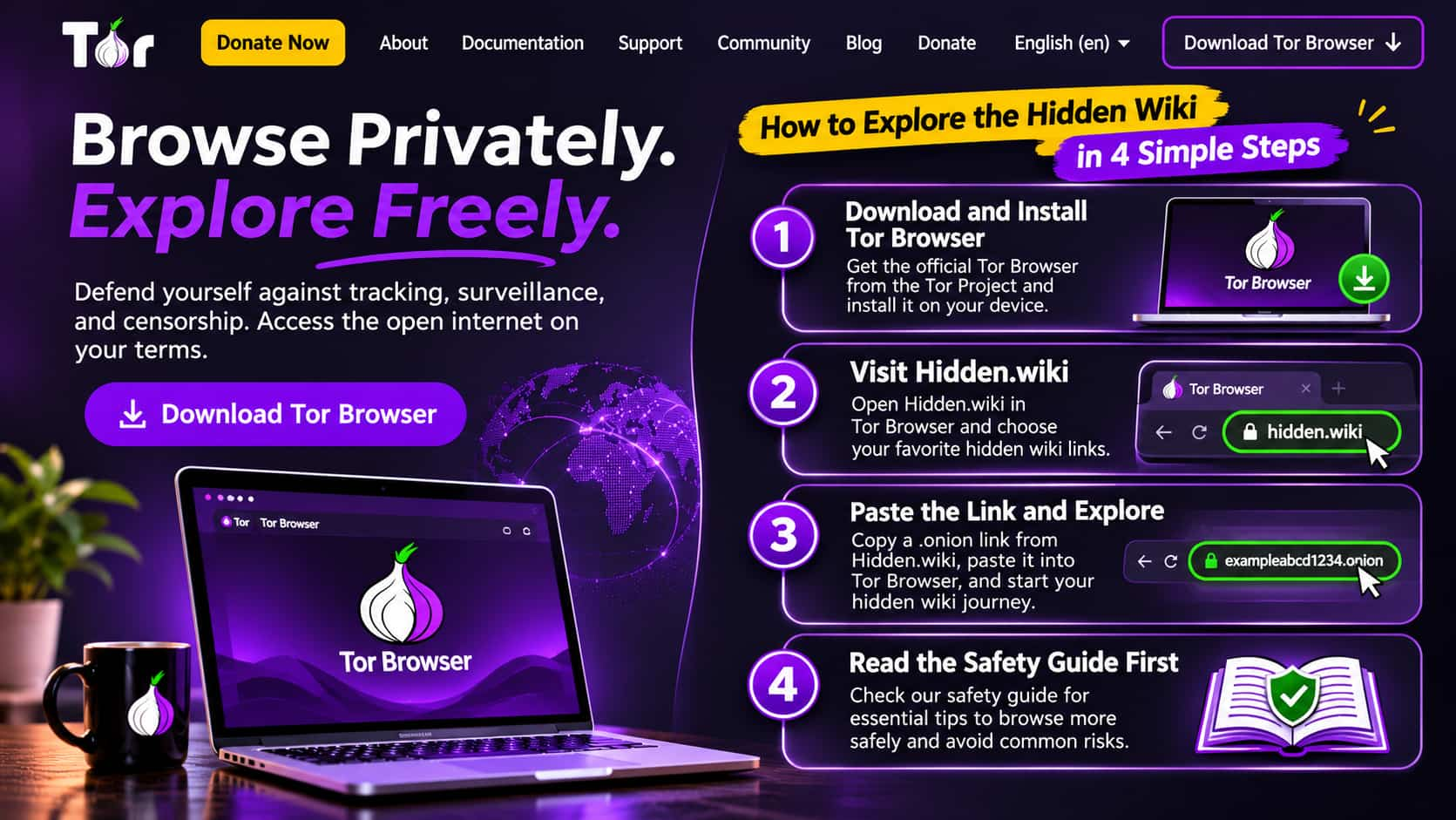
How to Access Dark Web Links
- Download Tor Browser from the official Tor Project website.
- Connect to Tor and open Hidden.wiki in your browser.
- Explore the onion links listed below, and verify unfamiliar websites before visiting them.
You can also explore this http://zqktlwiuavvvqqt4ybvgvi7tyo4hjl5xgfuvpdf6otjiycgwqbym2qad.onion/wiki/index.php/Main_Page, although its current authenticity and availability haven’t been verified.
Hidden Wiki Alternatives
http://jaz45aabn5vkemy4jkg4mi4syheisqn2wn2n4fsuitpccdackjwxplad.onion/ OnionLinks v3
http://bj5hp4onm4tvpdb5rzf4zsbwoons67jnastvuxefe4s3v7kupjhgh6qd.onion/ Another Hidden Wiki
http://qrtitjevs5nxq6jvrnrjyz5dasi3nbzx24mzmfxnuk2dnzhpphcmgoyd.onion/ Pug’s Ultimate Dark Web Guide
http://xsglq2kdl72b2wmtn5b2b7lodjmemnmcct37owlz5inrhzvyfdnryqid.onion/ The Hidden Wiki
Bitcoin Mixers And Anonymous Wallets
http://zwf5i7hiwmffq2bl7euedg6y5ydzze3ljiyrjmm7o42vhe7ni56fm7qd.onion/ Onionwallet Anonymous and secure bitcoin wallet and mixer
http://vu3miq3vhxljfclehmvy7ezclvsb3vksmug5vuivbpw4zovyszbemvqd.onion/ EasyCoin Bitcoin Wallet and Mixer
http://5kpq325ecpcncl4o2xksvaso5tuydwj2kuqmpgtmu3vzfxkpiwsqpfid.onion/ VirginBitcoins Buy freshly mined clean bitcoins
http://cr32aykujaxqkfqyrjvt7lxovnadpgmghtb3y4g6jmx6oomr572kbuqd.onion/ Dark Mixer Anonymous bitcoin mixer
http://74ck36pbaxz7ra6n7v5pbpm5n2tsdaiy4f6p775qvjmowxged65n3cid.onion/ Mixabit Bitcoin mixer
Dark Web Markets and Drug Vendors
http://gkcns4d3453llqjrksxdijfmmdjpqsykt6misgojxlhsnpivtl3uwhqd.onion/ DrChronic Weed straight from the source
http://rbcxodz4socx3rupvmhan2d7pvik4dpqmf4kexz6acyxbucf36a6ggid.onion/ 420prime Cannabis in dispensary quality from the UK
http://gn74rz534aeyfxqf33hqg6iuspizulmvpd7zoyz7ybjq4jo3whkykryd.onion/ NLGrowers Coffee Shop grade Cannabis from the Netherlands
http://wms5y25kttgihs4rt2sifsbwsjqjrx3vtc42tsu2obksqkj7y666fgid.onion/ DCdutchconnectionUK The dutch connection for the UK
http://c5xoy22aadb2rqgw3jh2m2irmu563evukqqddu5zjandunaimzaye5id.onion/ TomAndJerry Cocaine, Heroin, MDMA and LSD from NL
http://dumlq77rikgevyimsj6e2cwfsueo7ooynno2rrvwmppngmntboe2hbyd.onion/ DeDope German Weed Store
http://7bw24ll47y7aohhkrfdq2wydg3zvuecvjo63muycjzlbaqlihuogqvyd.onion/ Bitpharma Biggest european .onion drug store
http://hyxme2arc5jnevzlou547w2aaxubjm7mxhbhtk73boiwjxewawmrz6qd.onion/ CannabisUK UK wholesale cannabis supplier
http://porf65zpwy2yo4sjvynrl4eylj27ibrmo5s2bozrhffie63c7cxqawid.onion/ Smokeables Finest organic cannabis from the USA
http://wges3aohuplu6he5tv4pn7sg2qaummlokimim6oaauqo2l7lbx4ufyyd.onion/ EuCanna First Class Cannabis
http://4p6i33oqj6wgvzgzczyqlueav3tz456rdu632xzyxbnhq4gpsriirtqd.onion/ Peoples Drug Store The Darkwebs best Drug supplier!
http://6hzbfxpnsdo4bkplp5uojidkibswevsz3cfpdynih3qvfr24t5qlkcyd.onion/ Brainmagic Best Darkweb psychedelics
Other Dark Web Vendors
http://f6wqhy6ii7metm45m4mg6yg76yytik5kxe6h7sestyvm6gnlcw3n4qad.onion/ Cardshop USA CVV KNOWN BALANCE & Worldwide CC & CVV
http://pz5uprzhnzeotviraa2fogkua5nlnmu75pbnnqu4fnwgfffldwxog7ad.onion/ USAcitizenship become a citizen of the USA
http://pliy7tiq6jf77gkg2sezlx7ljynkysxq6ptmfbfcdyrvihp7i6imyyqd.onion/ Counterfeit USD High Quality USD counterfeits
http://awsvrc7occzj2yeyqevyrw7ji5ejuyofhfomidhh5qnuxpvwsucno7id.onion/ Apples4Bitcoin Iphones, Ipads and more for bitcoin
http://sazyr2ntihjqpjtruxbn2z7kingj6hfgysiy5lzgo2aqduqpa3gfgmyd.onion/ Darkmining Bitcoin mining with stolen electricity
http://2bcbla34hrkp6shb4myzb2wntl2fxdbrroc2t4t7c3shckvhvk4fw6qd.onion/ Webuybitcoins Sell your Bitcoins for Cash, Paypal, WU etc
http://gch3dyxo5zuqbrrtd64zlvzwxden4jkikyqk3ikjhggqzoxixcmq2fid.onion/ ccPal – PayPals, Ebays, CCs and more
http://hyjgsnkanan2wsrksd53na4xigtxhlz57estwqtptzhpa53rxz53pqad.onion/ EuroGuns
http://7wsvq2aw5ypduujgcn2zauq7sor2kqrqidguwwtersivfa6xcmdtaayd.onion/ USfakeIDs US fake ID store
http://jn6weomv6klvnwdwcgu55miabpwklsmmyaf5qrkt4miif4shrqmvdhqd.onion/ Rent-A-Hacker Hire a hacker for Bitcoin
http://2ezyofc26j73hv3xxvsrnbc23dqxhgxqtk5ogcc7y6j5t6rlqquvhzid.onion/ Bitcoin Investment Trust earn 5-9% per week!
http://z7s2w5vruxbp2wzts3snxs24yggbtdcdj5kp2f6z5gimouyh3wiaf7id.onion/ AccMarket Premium Paypal, Ebay and bank accounts
http://zkj7mzglnrbvu3elepazau7ol26cmq7acryvsqxvh4sreoydhzin7zid.onion/ Dark Web Hackers for hire
http://onili244aue7jkvzn2bgaszcb7nznkpyihdhh7evflp3iskfq7vhlzid.onion/ Uk Guns and Ammo Store
http://sa3ut5u4qdw7yiunpdieypzsrdylhbtafyhymd75syjcn46yb5ulttid.onion/ HQER High Quality Euro bill counterfeits
http://bepig5bcjdhtlwpgeh3w42hffftcqmg7b77vzu7ponty52kiey5ec4ad.onion/ Kamagra 4 Bitcoin Like Viagra but cheaper
http://endtovmbc5vokdpnxrhajcwgkfbkfz4wbyhbj6ueisai4prtvencheyd.onion/ OnionIdentityServices Fake passports and ID cards for bitcoin
http://ez37hmhem2gh3ixctfeaqn7kylal2vyjqsedkzhu4ebkcgikrigr5gid.onion/ Mobile Store Best unlocked cell phones vendor
http://wosc4noitfscyywccasl3c4yu3lftpl2adxuvprp6sbg4fud6mkrwqqd.onion/ UKpassports real UK passports
Other Hidden Sites
http://danielas3rtn54uwmofdo3x2bsdifr47huasnmbgqzfrec5ubupvtpid.onion/ DanielWin
http://answerszuvs3gg2l64e6hmnryudl5zgrmwm3vh65hzszdghblddvfiqd.onion/ Hidden Answers
https://kcmykvkkt3umiyx4xouu3sjo6odz3rolqphy2i2bbdan33g3zrjfjgqd.onion/ aboutMastodon
http://dhosting4xxoydyaivckq7tsmtgi4wfs3flpeyitekkmqwu4v4r46syd.onion/ Daniels Hosting
http://cathug2kyi4ilneggumrenayhuhsvrgn6qv2y47bgeet42iivkpynqad.onion/ cathugger’s site
http://zgeajoabenj2nac6k5cei5qy62iu5yun5gm2vjnxy65r3p3amzykwxqd.onion/ Darkweb Blog
http://ozmh2zkwx5cjuzopui64csb5ertcooi5vya6c2gm4e3vcvf2c2qvjiyd.onion/ riseup searx
http://45tbhx5prlejzjgn36nqaxqb6qnm73pbohuvqkpxz2zowh57bxqawkid.onion/ Parckwart’s Website
http://sidignlwz2odjhgcfhbueinmr23v5bubq2x43dskcebh5sbd2qrxtkid.onion/ securejabber
http://sik5nlgfc5qylnnsr57qrbm64zbdx6t4lreyhpon3ychmxmiem7tioad.onion/ Qubes OS
http://dds6qkxpwdeubwucdiaord2xgbbeyds25rbsgr73tbfpqpt4a6vjwsyd.onion/ Whonix
http://lldan5gahapx5k7iafb3s4ikijc4ni7gx5iywdflkba5y2ezyg6sjgyd.onion/ OnionShare
http://nanochanqzaytwlydykbg5nxkgyjxk3zsrctxuoxdmbx5jbh2ydyprid.onion/ NanoChan
http://picochanwvqfa2xsrfzlul4x4aqtog2eljll5qnj5iagpbhx2vmfqnid.onion/ PicoChan
http://enxx3byspwsdo446jujc52ucy2pf5urdbhqw3kbsfhlfjwmbpj5smdad.onion/ EndChan
http://dngtk6iydmpokbyyk3irqznceft3hze6q6rasrqlz46v7pq4klxnl4yd.onion/ 256Chan
http://cct5wy6mzgmft24xzw6zeaf55aaqmo6324gjlsghdhbiw5gdaaf4pkad.onion/ Snopyta
http://wnrgozz3bmm33em4aln3lrbewf3ikxj7fwglqgla2tpdji4znjp7viqd.onion/ VYempire.xyz
http://7sk2kov2xwx6cbc32phynrifegg6pklmzs7luwcggtzrnlsolxxuyfyd.onion/ SystemLI.org
http://stormwayszuh4juycoy4kwoww5gvcu2c4tdtpkup667pdwe4qenzwayd.onion/ CryptoStorm VPN
http://xdkriz6cn2avvcr2vks5lvvtmfojz2ohjzj4fhyuka55mvljeso2ztqd.onion/ Cock.li
http://eludemailxhnqzfmxehy3bk5guyhlxbunfyhkcksv4gvx6d3wcf6smad.onion/ Elude.in
http://lainwir3s4y5r7mqm3kurzpljyf77vty2hrrfkps6wm4nnnqzest4lqd.onion/ qord11.net
http://cgjzkysxa4ru5rhrtr6rafckhexbisbtxwg2fg743cjumioysmirhdad.onion/ Course Enigma
http://killnod2s77o3axkktdu52aqmmy4acisz2gicbhjm4xbvxa2zfftteyd.onion/ Kill9
http://digdeep4orxw6psc33yxa2dgmuycj74zi6334xhxjlgppw6odvkzkiad.onion/ DigDeeper
http://spywaredrcdg5krvjnukp3vbdwiqcv3zwbrcg6qh27kiwecm4qyfphid.onion/ Spyware Watchdog
http://meynethaffeecapsvfphrcnfrx44w2nskgls2juwitibvqctk2plvhqd.onion/ May Vane Day Studios
http://zsxjtsgzborzdllyp64c6pwnjz5eic76bsksbxzqefzogwcydnkjy3yd.onion/ Shadow Wiki
http://g7ejphhubv5idbbu3hb3wawrs5adw7tkx7yjabnf65xtzztgg4hcsqqd.onion/ Defcon
http://p53lf57qovyuvwsc6xnrppyply3vtqm7l6pcobkmyqsiofyeznfu5uqd.onion/ Propublica
http://darkzzx4avcsuofgfez5zq75cqc4mprjvfqywo45dfcaxrwqg6qrlfid.onion/ Darknetlive
http://keybase5wmilwokqirssclfnsqrjdsi7jdir5wy7y7iu3tanwmtp6oid.onion/ KeyBase.IO
http://ciadotgov4sjwlzihbbgxnqg3xiyrg7so2r2o3lt5wz5ypk4sxyjstad.onion/ CIA.GOV
http://archivebyd3rzt3ehjpm4c3bjkyxv3hjleiytnvxcn7x32psn2kxcuid.onion/ Internet Archive
http://bible4u2lvhacg4b3to2e2veqpwmrc2c3tjf2wuuqiz332vlwmr4xbad.onion/ Bible4u
http://kx5thpx2olielkihfyo4jgjqfb7zx7wxr3sd4xzt26ochei4m6f7tayd.onion/ Imperial Library
http://nv3x2jozywh63fkohn5mwp2d73vasusjixn3im3ueof52fmbjsigw6ad.onion/ Comic Books
Hidden Wiki – Onion Links, Dark Web Resources & Safety Guide
Welcome to the Hidden Wiki, a place to explore the lesser-known side of the internet. Unlike regular websites you find through Google or Bing, many sites on the dark web use special .onion addresses that can only be accessed through the Tor network.
Here, you’ll find a collection of dark web links, onion websites, and useful resources covering privacy, communication, independent journalism, and more. Whether you’re curious about how the dark web works or looking for a particular onion site, the goal is to help you find information without getting lost along the way.
Not every link on the dark web is trustworthy, and some websites may disappear without warning. That’s why it’s important to understand what you’re visiting, verify links whenever possible, and take basic precautions before exploring.
What Is the Hidden Wiki?
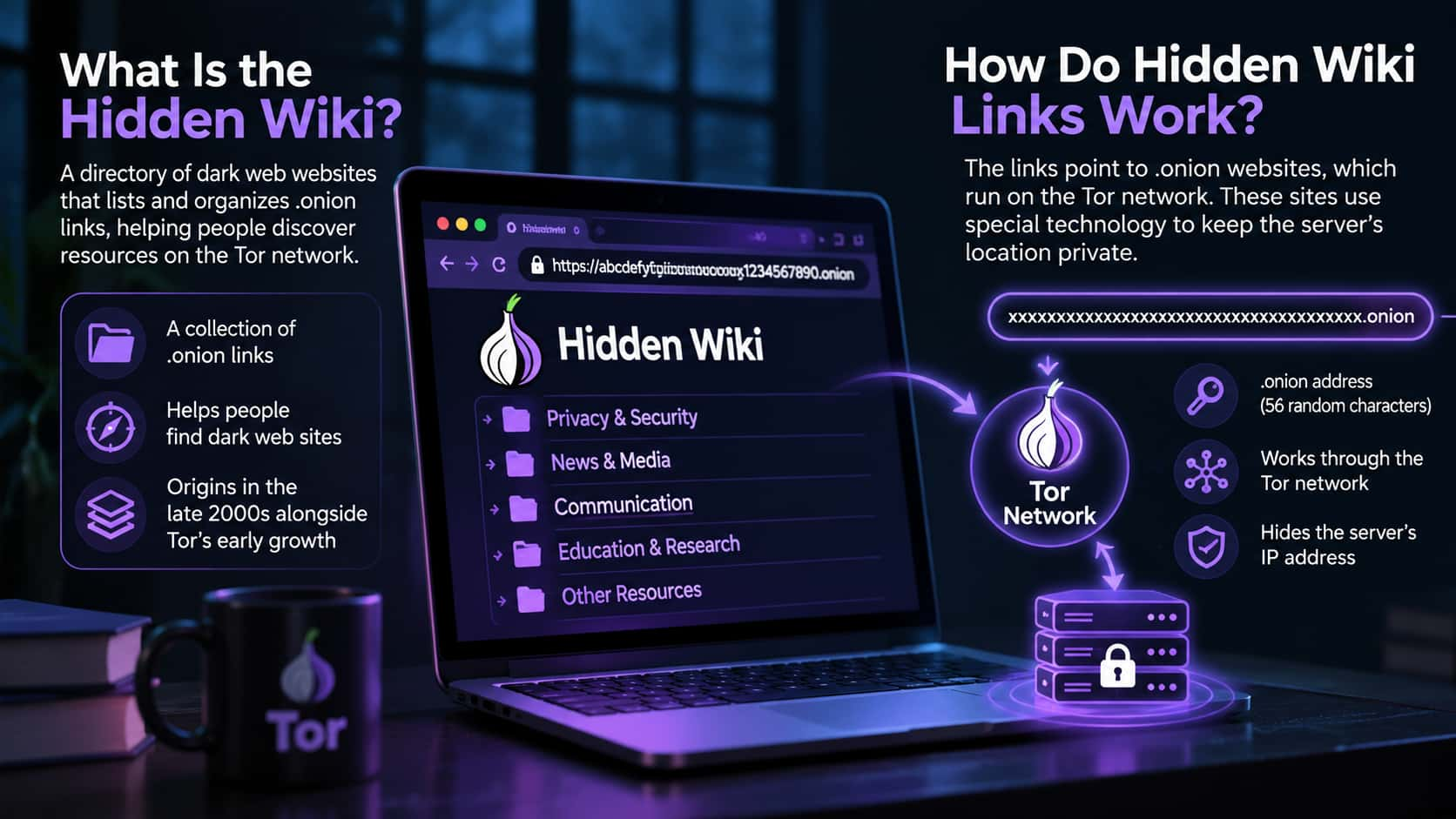
The Hidden Wiki is a directory of websites and resources found on the dark web, particularly those using .onion addresses. Think of it as a collection of links that helps people discover websites they wouldn’t normally find through traditional search engines like Google or Bing.
The idea behind the Hidden Wiki goes back to the early days of the Tor network, when finding active onion websites wasn’t nearly as straightforward as searching the regular internet. Early versions of the Hidden Wiki appeared in the late 2000s, allowing users to share and organize links to different hidden services.
Over time, the Hidden Wiki became one of the more recognizable names associated with dark web directories. However, there isn’t just one version anymore. Different websites use the Hidden Wiki name, and their content, link collections, and reliability can vary considerably.
Today, people visit Hidden Wiki directories for different reasons. Some are researching online privacy or cybersecurity, while others are looking for independent news platforms, anonymous communication services, or websites that operate through Tor.
If you’re curious about what these directories actually offer, our guide to what you can find on the Hidden Wiki takes a closer look at the different types of websites and resources visitors may encounter.
It’s also worth understanding that the Hidden Wiki isn’t an official Tor Project website, and appearing in a directory doesn’t automatically make an onion site legitimate or safe. Links can become outdated, websites can change ownership, and some destinations may be misleading or harmful.
How Do Hidden Wiki Links Work?
If you’ve ever looked through a Hidden Wiki directory, you’ve probably noticed that many of the website addresses look nothing like the URLs you’re used to seeing. Instead of ending in .com, .org, or .net, they end in .onion and usually contain a long string of seemingly random letters and numbers.
These are called onion addresses, and they’re designed to work through the Tor network, rather than the regular internet browsing system.
When you visit a normal website, your browser typically uses the Domain Name System (DNS) to find the server associated with its address. Onion websites work differently. They use Tor’s onion service technology, which allows visitors to connect to a website without publicly revealing the server’s IP address.
Why Are .Onion Addresses So Long?
Modern onion addresses contain 56 characters before the .onion ending. They might look complicated, but there’s a reason for that.
If you’ve ever wondered why these addresses are so complicated, our article on why onion addresses are so long explains the technology behind them and how modern onion URLs are created.
Unlike traditional domain names, which are usually registered through domain registrars, modern onion addresses are generated using cryptographic keys. The address is connected to the onion service’s identity, helping Tor verify that you’re connecting to the service associated with that address.
For a more detailed explanation, the Tor Project’s official Onion Services documentation explains how these addresses and private connections work.
This is also why changing even a single character in an onion address can prevent the website from loading.
Can You Open Hidden Wiki Links in a Regular Browser?
Not directly. Browsers like Chrome, Safari, and Microsoft Edge don’t natively support connections to .onion websites.
To access these addresses, you’ll generally need Tor Browser, which is designed to route your connection through the Tor network.
Once Tor Browser is connected, you can enter an onion address much like you would enter a regular website URL. Tor handles the connection in the background, allowing you to reach the onion service without needing to know its physical server location.
However, not every onion link you find will work. Some websites go offline, change their addresses, or stop operating altogether.
And while Tor provides important privacy protections, it doesn’t guarantee that every website you visit is safe. A suspicious download, phishing page, or fraudulent service can still put your information at risk.
That’s why it’s always worth checking onion addresses against official sources whenever possible, rather than assuming a link is trustworthy simply because it appears in a Hidden Wiki directory.
Why Do Dark Web Links Stop Working?
If you’ve spent any time exploring the dark web, you’ve probably clicked an onion link only to find that the website won’t load. Sometimes Tor Browser displays an error message, while other times the page keeps loading without ever opening.
This is fairly common with onion websites. Unlike popular websites on the regular internet, many onion services are operated by individuals or small groups with limited resources. Some stay online for years, while others disappear after just a few weeks.
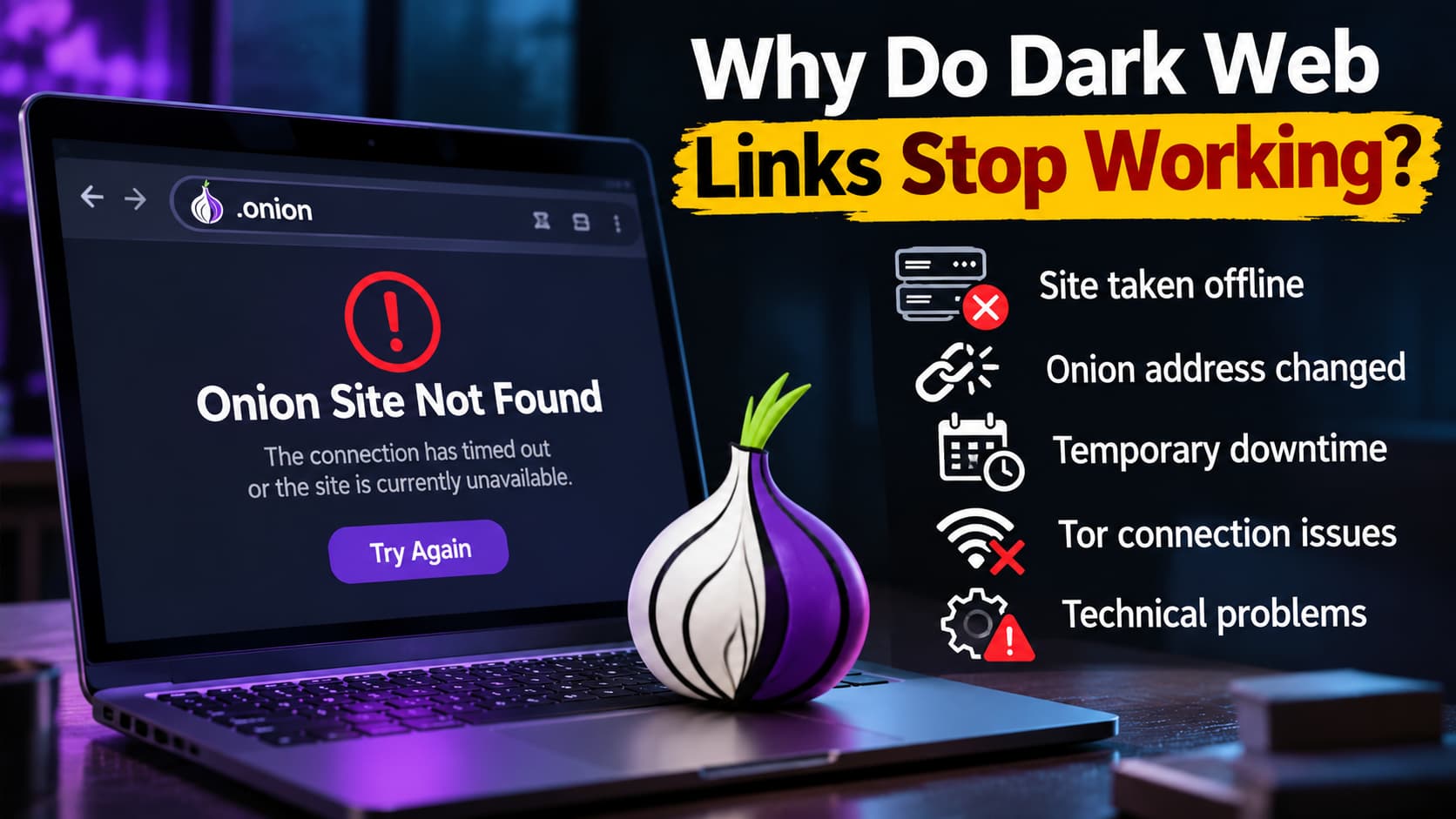
But a broken link doesn’t always mean the website is gone for good. There are several reasons why a dark web link might suddenly stop working.
The Website Has Gone Offline
One of the most common reasons is that the website’s server is no longer running. The operator may have shut it down, encountered technical problems, or temporarily taken the service offline for maintenance.
Some onion websites also operate irregularly, meaning they may be available at certain times and unreachable at others.
The Onion Address Has Changed
Unlike regular websites, onion services don’t necessarily have a familiar domain name that visitors can easily remember.
If an operator creates a new onion service with a different cryptographic identity, the website will have a different address. Older links may stop working even though the service continues operating elsewhere.
This is one reason dark web directories can become outdated over time.
You’re Using an Outdated Onion Link
Years ago, Tor supported shorter, 16-character v2 onion addresses. However, support for these older addresses was removed from Tor Browser in 2021.
Modern v3 onion addresses contain 56 characters before the .onion ending. If you find an old v2 address in an outdated article or directory, it won’t work in current versions of Tor Browser.
There May Be a Problem With Your Tor Connection
Sometimes the problem isn’t the website at all.
A slow or unstable internet connection, temporary Tor network issues, or restrictions on your network can prevent onion websites from loading properly.
If several unrelated onion websites fail at the same time, it’s worth checking whether Tor Browser is connected and working correctly before assuming every link is broken.
The Website May Be Experiencing Technical Problems
Onion services can experience many of the same problems as ordinary websites, including server overload, software failures, and unexpected downtime.
Some services may also become temporarily unavailable because of denial-of-service attacks or other disruptions.
In these situations, the website might return later without changing its onion address.
What Should You Do When an Onion Link Doesn’t Work?
First, double-check the address. A single missing or incorrect character can prevent an onion website from opening.
Next, make sure you’re using an updated version of Tor Browser and that your connection to the Tor network is working.
If the website belongs to a legitimate organization, check its official public website for a current onion address. Avoid trusting random replacement links posted in comments, forums, or unfamiliar directories, especially when they claim to lead to financial services or login pages.
If Tor Browser keeps showing an error, our guide to what “Onionsite Not Found” means explains the possible causes and how to troubleshoot connection problems.
Sometimes the simplest explanation is the correct one: the website is no longer available.
Dark web links aren’t guaranteed to remain active forever, and even a regularly maintained Hidden Wiki directory can contain addresses that stop working without warning. Understanding these limitations can help you avoid unnecessary troubleshooting and recognize when it’s time to look for a more reliable source.
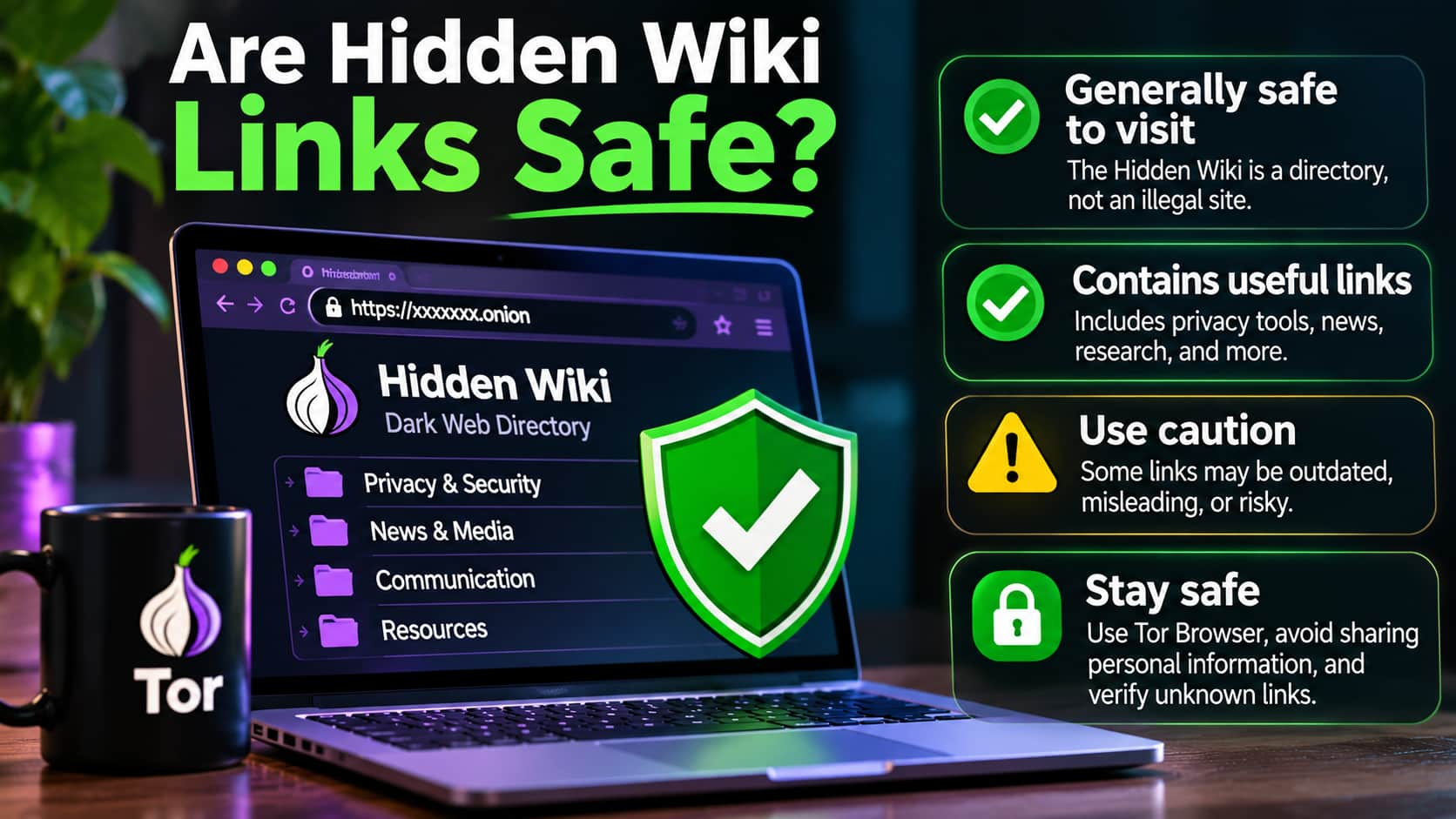
Are Hidden Wiki Links Safe?
Not every link you find on the Hidden Wiki is dangerous, but not every link is trustworthy either. The dark web is home to legitimate websites, privacy-focused services, independent news platforms, and online communities. Unfortunately, it also attracts scammers, phishing websites, and people looking to take advantage of visitors who aren’t familiar with how onion sites work.
The biggest mistake is assuming that a website is safe simply because it’s listed in a popular directory. A link might lead to a legitimate service today and become unavailable or point to something different later.
That’s why it’s worth taking a few precautions before opening unfamiliar dark web links.
Fake Websites and Phishing Scams
Phishing isn’t limited to the regular internet. Fake websites also exist on the dark web, and some are designed to look almost identical to legitimate onion services.
For example, someone might create a convincing copy of a well-known privacy service and trick visitors into entering their login credentials or other sensitive information.
Because onion addresses are long and difficult to remember, it’s easy to overlook small differences between a legitimate address and a fraudulent one.
Whenever possible, verify an onion address through the organization’s official website instead of relying on an unfamiliar third-party listing.
Malware and Suspicious Downloads
Some onion websites offer downloadable files, documents, or software. While many downloads are harmless, others may contain malware or unwanted programs.
Downloading a file from an unknown source can expose your device to security risks, especially if you open it using vulnerable software.
A good rule is to avoid downloading unfamiliar files and never install software simply because a website claims it’s necessary to access its content.
If you need Tor Browser, download it directly from the official Tor Project website rather than trusting unfamiliar third-party download links.
Scams and Misleading Services
Another risk involves websites that promise services or products they never intend to deliver.
Some fraudulent onion sites imitate legitimate platforms, request payments, or make unrealistic promises to attract visitors.
Cryptocurrency payments can be particularly difficult to recover once sent, making these scams especially costly.
Be cautious of websites that pressure you to act quickly, request unnecessary personal information, or claim to offer guaranteed results.
Does Tor Browser Make Every Website Safe?
Tor Browser is designed to provide privacy protections by routing traffic through the Tor network and reducing certain forms of online tracking.
However, privacy and website safety are two different things.
Tor doesn’t automatically prevent phishing, malware, fraud, or every form of tracking. If you voluntarily share personal information with a website, download malicious software, or enter your credentials on a fake login page, using Tor won’t necessarily protect you from the consequences.
Keeping Tor Browser updated and following basic security practices remain important.
How Can You Tell If an Onion Link Is Trustworthy?
There’s no single test that guarantees an onion website is safe, but a few simple checks can help you make a better decision.
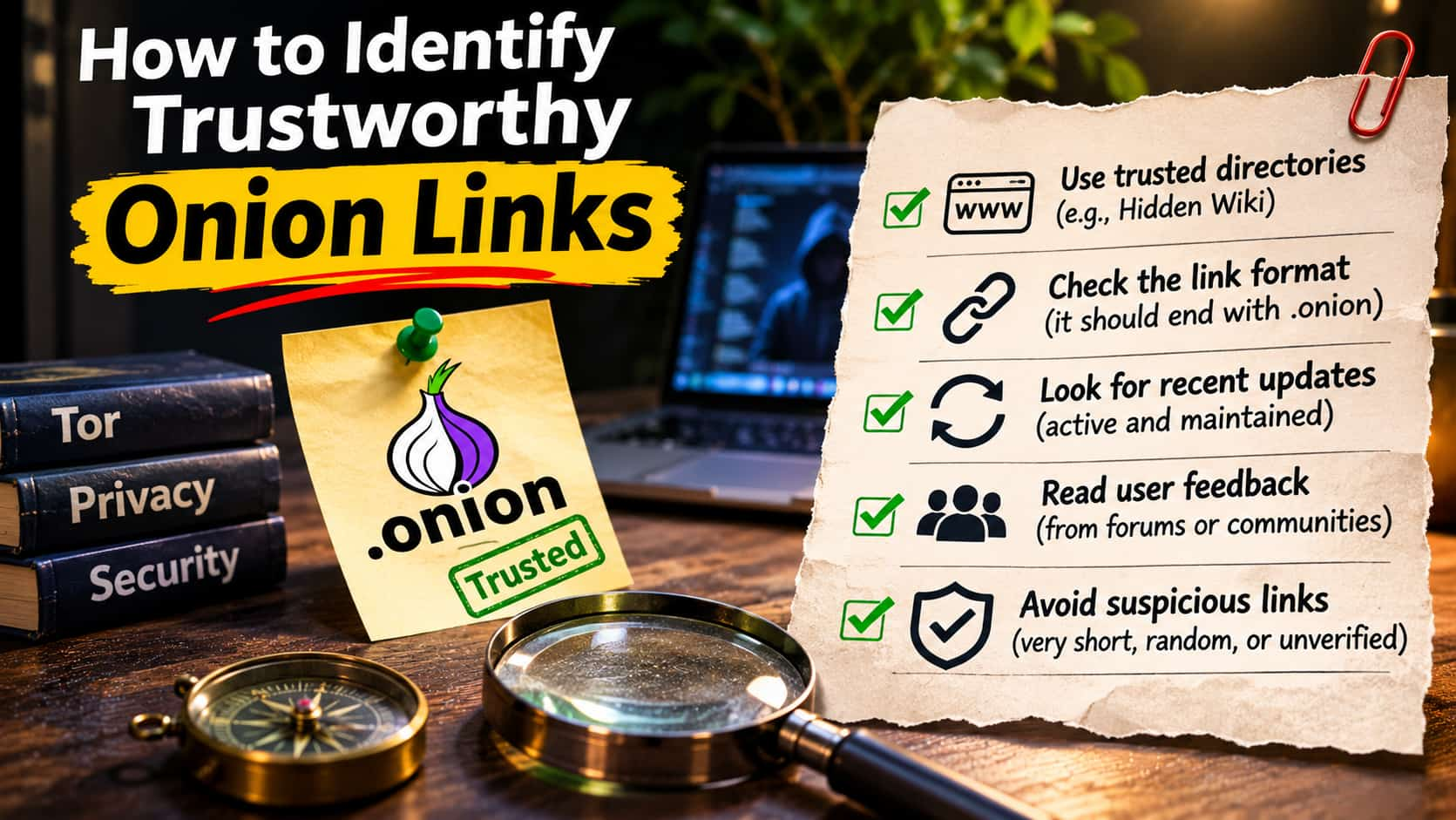
Start by looking for an official source. Some established organizations publish their onion addresses on their regular websites, allowing visitors to verify that they’re connecting to the intended service.
Pay attention to unusual requests for personal information, unexpected downloads, and websites that imitate familiar brands. If something looks suspicious, it’s better to leave than take an unnecessary risk.
It’s also important to remember that a working onion link isn’t necessarily a legitimate one. Just because a website loads successfully doesn’t mean its operator is trustworthy.
The Hidden Wiki can be a useful starting point for discovering onion websites, but visitors should treat directory listings as references rather than guarantees of safety. Taking time to verify unfamiliar links can make exploring the dark web a more informed and cautious experience.
Legitimate Uses of the Dark Web
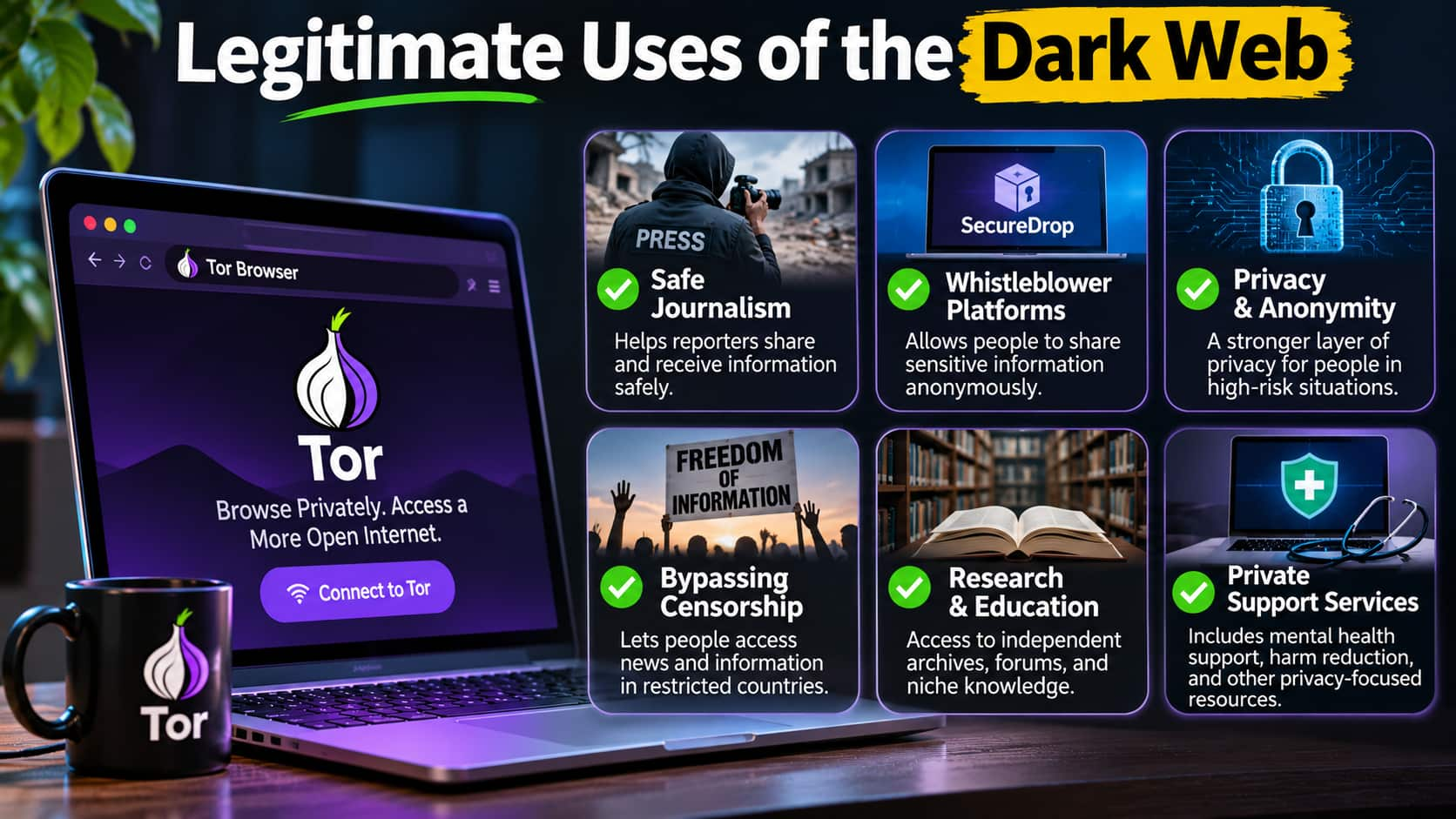
When people hear the term “dark web,” they often think of illegal marketplaces, hackers, or stolen information. While those activities do exist, they don’t represent everything happening on the Tor network.
In reality, the dark web also serves legitimate purposes. Journalists, researchers, privacy advocates, and everyday internet users rely on onion services for reasons that have nothing to do with illegal activity.
For some people, it’s simply another way to access information. For others, it provides an additional layer of privacy when communicating or browsing online.
Journalism and Anonymous Whistleblowing
One of the most important legitimate uses of the dark web is helping journalists communicate with confidential sources.
Investigative reporters sometimes work with people who have access to sensitive information about corruption, misconduct, or other matters of public interest. Those sources may face serious consequences if their identities become known.
That’s where tools like SecureDrop come in.
SecureDrop is an open-source whistleblower submission system used by news organizations to receive documents and messages from anonymous sources.
It uses the Tor network to help protect communication between journalists and people sharing information.
Major news organizations, including The New York Times and ProPublica, have used SecureDrop to provide confidential submission channels.
Although no technology can guarantee complete anonymity, these systems can reduce some of the risks associated with contacting journalists.
Accessing Information in Censored Regions
Not everyone has the same level of access to the internet.
In some countries, governments or internet service providers restrict access to news websites, social media platforms, and other online resources. People living under these restrictions may have difficulty accessing independent information.
Tor can help users reach certain websites when ordinary connections are blocked, although its availability and effectiveness depend on local restrictions.
Some organizations also operate onion versions of their websites, allowing visitors to connect through the Tor network without relying on conventional DNS resolution.
For people facing internet censorship, these services can provide another way to access news, educational materials, and other information.
However, using Tor may itself attract attention or carry legal risks in certain locations, so users should understand their local circumstances.
Protecting Online Privacy
Privacy is another reason people use the dark web.
Everyday internet activity can reveal information such as your IP address, approximate location, browsing habits, and the websites you visit. While some data collection supports legitimate services, many people prefer to limit how much information they share online.
Tor Browser is designed to make it more difficult for websites to identify visitors through their network addresses and certain tracking techniques.
Onion services add another layer by allowing websites to operate without publicly exposing their server IP addresses.
This doesn’t mean Tor makes someone completely invisible online. Browser behavior, account logins, downloads, and information users voluntarily share can still create privacy risks.
Still, for people who value greater control over their online activity, Tor offers privacy features that ordinary browsing doesn’t provide in the same way.
Cybersecurity Research and Education
Cybersecurity professionals and researchers also study the dark web to better understand online threats.
Their work may involve investigating phishing campaigns, tracking exposed credentials, examining criminal activity, or studying how anonymous networks operate.
Security researchers sometimes monitor publicly accessible dark web sources to identify emerging threats and understand how stolen information is being advertised or distributed.
This research can help organizations improve security practices, respond to data breaches, and educate users about online risks.
However, responsible research requires clear ethical boundaries. Investigating a threat doesn’t require participating in illegal transactions, downloading stolen personal data, or interacting with criminal services.
Independent Communities and Communication
The Tor network also supports websites and communities built around privacy, technology, and open discussion.
Some onion services host discussion forums, educational resources, personal blogs, or communication platforms for people who prefer not to expose their network locations.
Others provide alternative ways to access existing services through Tor.
These communities aren’t necessarily secretive or illegal. In many cases, they’re simply using technology that offers different privacy and hosting characteristics from the traditional web.
The Dark Web Is More Than Its Reputation
The dark web has genuine risks, and those risks shouldn’t be ignored. But treating every onion website as suspicious overlooks the legitimate reasons this technology exists.
From confidential journalism and censorship resistance to privacy education and cybersecurity research, Tor and onion services have practical uses beyond the activities that usually make headlines.
For anyone exploring the Hidden Wiki, understanding these legitimate uses can help put dark web links into context and make it easier to recognize resources that serve a meaningful purpose.
How to Identify Trustworthy Onion Links
Finding an onion link is easy. Figuring out whether you can trust it is a different story.
Unlike regular websites, onion services often use long addresses made up of random-looking letters and numbers. That makes it harder to recognize a legitimate website at a glance, especially when several similar links appear in different dark web directories.
The good news is that there are a few practical ways to check an onion address before trusting the website behind it.
Check the Website’s Official Source
One of the most reliable ways to verify an onion link is to find it on the organization’s official website.
For example, some news organizations, privacy services, and technology platforms publish their onion addresses on their regular websites. This gives visitors a way to confirm that the address belongs to the organization they intend to reach.
If you’re looking for the onion version of a particular service, start with its official website rather than an unfamiliar directory or social media post.
Some websites also use a feature called Onion-Location, which allows Tor Browser to indicate when an onion version of the website is available.
And if you can’t find an official reference, don’t automatically assume that a link claiming to represent that organization is genuine.
Pay Attention to the Full Onion Address
Modern onion addresses contain 56 characters before the .onion ending. These characters are part of the service’s cryptographic identity, which is why even a small typing mistake can prevent the address from working.
Scammers sometimes take advantage of how difficult these addresses are to recognize by promoting misleading links or creating websites that imitate legitimate services.
Instead of manually typing a long onion address, copy it directly from a trusted source and check that the complete address matches.
It’s also worth remembering that a valid onion address only helps establish which onion service you’re connecting to. It doesn’t prove that the people operating the website are honest.
Look for Signs of a Fake Website
A convincing design doesn’t necessarily mean a website is legitimate.
Phishing websites can copy familiar logos, layouts, and login pages to make visitors believe they’re using a trusted service.
Be cautious if an onion website unexpectedly asks for passwords, recovery phrases, payment information, or personal documents.
Other warning signs include suspicious downloads, unrealistic promises, unexpected payment requests, and messages pressuring you to act immediately.
If a website claims to represent a well-known organization but you can’t verify that connection, it’s safer not to provide any sensitive information.
Don’t Rely on a Single Dark Web Directory
Dark web directories, including Hidden Wiki websites, can help visitors discover onion services. However, a directory listing should never be treated as proof that a website is trustworthy.
Links may become outdated, operators may move to new addresses, and some listings may contain inaccurate descriptions.
If you find an unfamiliar onion website through a directory, look for independent information about the service before deciding whether to use it.
For established organizations, official announcements and verified public websites are generally more useful than anonymous recommendations.
Understand the Difference Between Privacy and Trust
One of the biggest misconceptions about onion websites is that Tor’s privacy features automatically make the websites themselves secure.
Tor helps protect certain information about network connections, but it doesn’t evaluate whether a website is honest, safe, or legally operated.
A legitimate organization can run an onion service, and so can a scammer. Both may use the same underlying technology.
That’s why verifying the identity and reputation of a website matters just as much as understanding how Tor works.
When in Doubt, Don’t Share Personal Information
You don’t need to create an account, download a file, or provide personal details just to investigate whether an unfamiliar onion website is legitimate.
If something seems suspicious, avoid interacting with the website until you can verify its identity through a reliable source.
And if you can’t establish who operates a service or whether its claims are genuine, the safest decision may be to avoid it altogether.
The Hidden Wiki can help you discover dark web links, but deciding which websites deserve your trust requires additional research. Taking a few minutes to verify an onion address can help you avoid phishing scams, misleading services, and unnecessary security risks.
Hidden Wiki Frequently Asked Questions
1. What is the Hidden Wiki used for?
The Hidden Wiki is a directory that helps people discover onion websites, dark web resources, and services accessible through the Tor network.
2. Is using the Hidden Wiki illegal?
Visiting the Hidden Wiki is generally legal in many countries. However, laws vary by location, and certain activities or services found through its links may be illegal.
3. Do I need Tor Browser to open Hidden Wiki links?
Yes, you’ll generally need Tor Browser or another properly configured Tor-enabled application to access .onion websites.
4. Are all Hidden Wiki links safe?
No. Some links lead to legitimate services, while others may contain scams, phishing pages, or harmful content. Always verify unfamiliar websites.
5. Why do some dark web links no longer work?
Onion websites may go offline, change addresses, experience server problems, or shut down permanently. Older links can become outdated.
6. Can Google or Bing find onion websites?
Traditional search engines generally don’t index .onion websites directly. However, they may index regular web pages that discuss or list onion addresses.
7. Can someone track me while using Tor?
Tor helps protect your privacy, but it doesn’t guarantee complete anonymity. Logging into accounts, sharing personal information, or downloading unsafe files can create risks.
8. Is the Hidden Wiki an official Tor Project website?
No. Hidden Wiki directories are independently operated and are not officially affiliated with the Tor Project.
Exploring the Hidden Wiki Responsibly
The Hidden Wiki offers a starting point for discovering onion websites and exploring parts of the internet that traditional search engines don’t usually reach. From privacy-focused services to independent news platforms and educational resources, the Tor network has more to offer than many people realize.
However, finding dark web links is only part of the experience. Knowing which websites to trust, understanding why some links stop working, and recognizing potential scams are just as important.
Before visiting an unfamiliar onion site, take a moment to verify its address, keep Tor Browser updated, and avoid sharing sensitive information with services you don’t trust.
Whether you’re new to the dark web or already familiar with Tor, a little research and caution can make a big difference. Use the Hidden Wiki as a resource for discovery, but always make informed decisions about the websites you choose to visit.