
Why Is the Hidden Wiki Still Relevant in 2026?
The Hidden Wiki remains one of the most recognized names in the Tor ecosystem. Even after years of change, people continue to search for it. Some want to learn about onion services. Others want to understand online privacy and how alternative networks work.
Interest in privacy has grown significantly in recent years. As a result, more people now research tools such as Tor and privacy-focused services. During that process, many come across the Hidden Wiki. The name has become closely linked to discussions about the Tor network and onion websites.
The Hidden Wiki also holds an important place in internet culture. Technology blogs, forums, and educational resources have mentioned it for many years. Because of that history, the term remains familiar to both beginners and experienced users.
In 2026, the Hidden Wiki represents more than a simple directory. It reflects the ongoing interest in privacy, digital freedom, and alternative online communities. Understanding its role helps readers better understand the wider Tor ecosystem and why this topic continues to attract attention today.
What Is the Hidden Wiki?
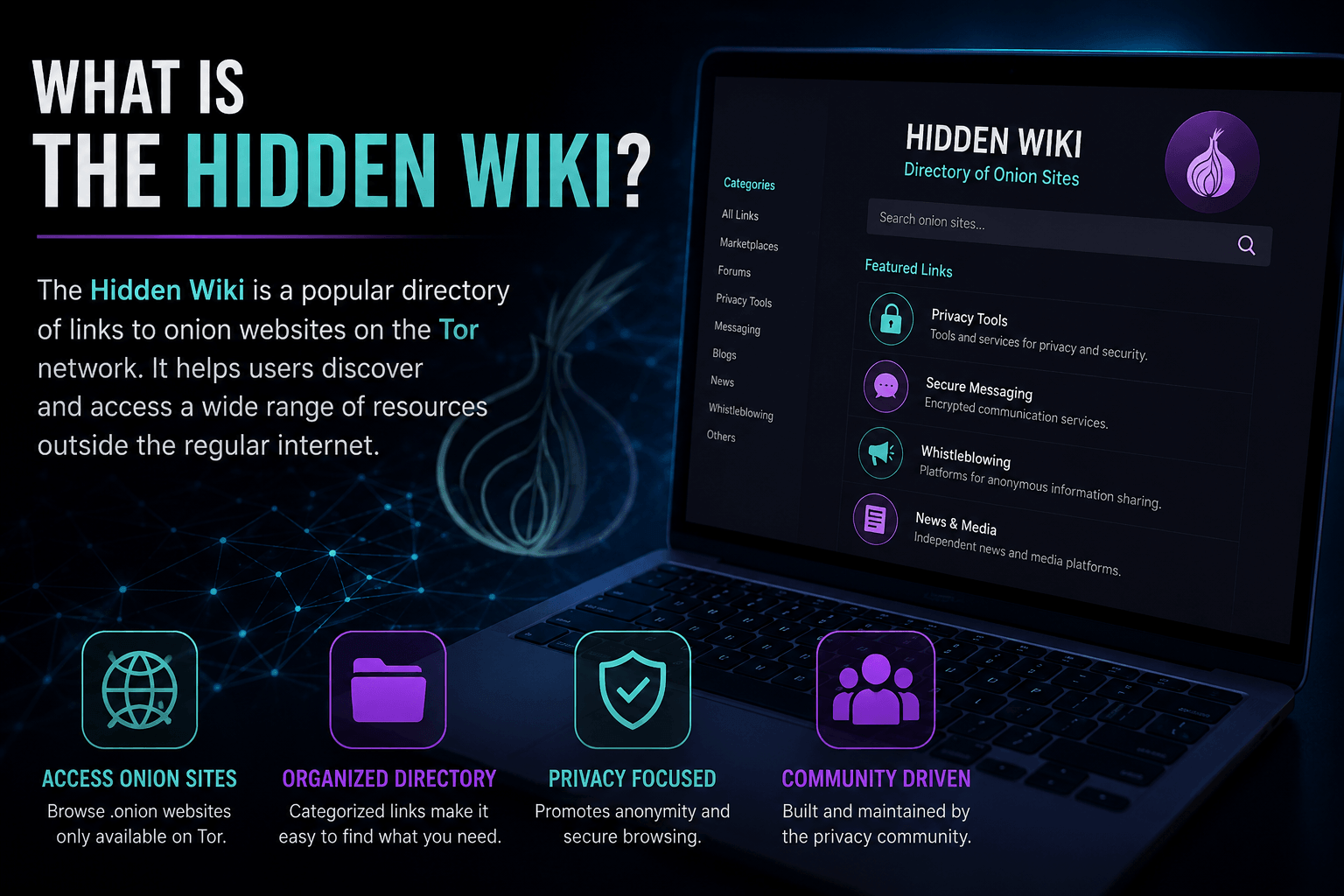
The Hidden Wiki is a well-known directory that helps users discover resources available on the Tor network. Unlike traditional websites that use standard domain names such as .com or .org, many Tor-based websites use special onion addresses that only work through the Tor Browser.
At its core, the Hidden Wiki functions as a collection of categorized links. It aims to organize different types of onion services and make them easier to find. Over the years, many versions of the Hidden Wiki have appeared online. Some remained active for long periods, while others disappeared or moved to new locations.
The directory became popular because the Tor network can be difficult for new users to navigate. On the regular internet, search engines help people find websites in seconds. The Tor ecosystem works differently. Many onion services do not appear in traditional search results, which makes directories an important discovery tool for some users.
The Hidden Wiki gained attention during the early growth of Tor. As more people became interested in online privacy, they searched for ways to explore onion services and learn about the network. The directory often appeared in discussions about privacy-focused browsing and alternative internet technologies.
Today, the Hidden Wiki remains one of the most recognized names associated with the Tor ecosystem. While the directory has changed over time, its role as a starting point for learning about onion services continues to attract interest. For many people, it serves as an introduction to a different side of the internet that operates outside the traditional web.
The Evolution of the Hidden Wiki
The Hidden Wiki has changed significantly since its early days. When the Tor network began attracting more users, finding onion websites was often difficult. Unlike the traditional web, there were no major search engines dedicated to indexing every onion service. As a result, directories became an important way for users to discover resources within the network.
During the growth of Tor, the Hidden Wiki emerged as one of the most recognized directory projects. It provided organized collections of links and helped newcomers explore different parts of the Tor ecosystem. As interest in online privacy increased, more people began searching for information about onion services. This growing audience contributed to the popularity of the Hidden Wiki and similar directories.
Over time, the situation became more complex. Different groups created their own versions of the Hidden Wiki, and many mirrors appeared across the network. Some directories remained active for years, while others disappeared, moved, or changed ownership. Because onion addresses can change and websites often come and go, maintaining a single directory proved challenging.
This history explains why confusion still exists today. Many users search for “the Hidden Wiki” as if it refers to one official website. In reality, the term has been associated with multiple versions and mirrors over the years. Some directories share similar names, while others offer different collections of links and resources.
Despite these changes, the Hidden Wiki remains an important part of Tor’s history. Its evolution reflects the growth of privacy-focused technologies and the ongoing effort to make onion services easier to discover. Understanding this history helps explain why the term continues to attract attention in 2026.
Why People Still Search for the Hidden Wiki
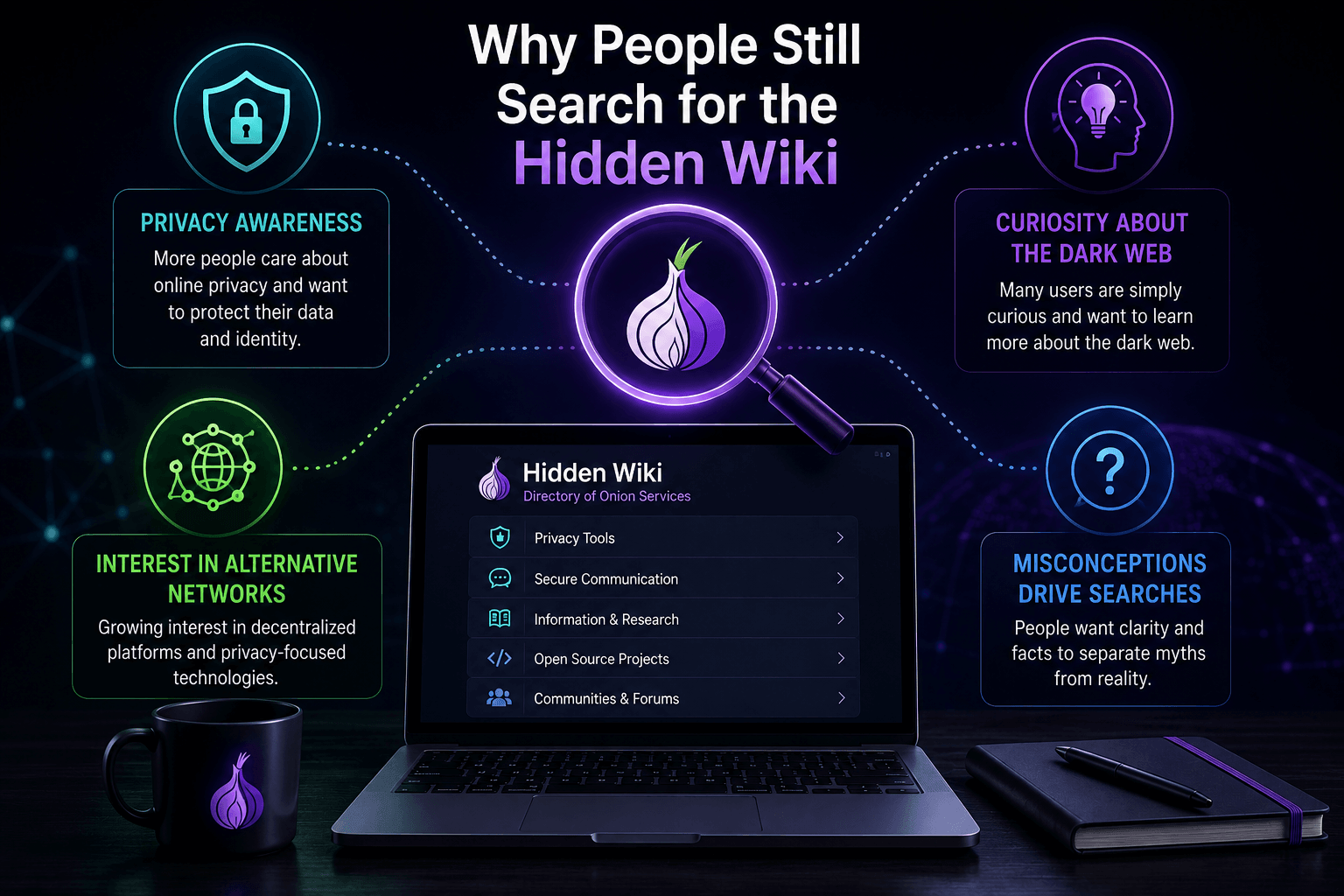
Even in 2026, the Hidden Wiki remains one of the most searched terms associated with the Tor network. While the internet has evolved significantly over the years, interest in privacy-focused technologies continues to grow. This trend helps explain why people still look for information about the Hidden Wiki and its role within the Tor ecosystem.
One major reason is increased privacy awareness. Many internet users now understand how websites, advertisers, and online platforms collect data. As concerns about tracking and digital privacy grow, more people begin researching privacy-focused tools and services. During that process, they often encounter discussions about Tor and the Hidden Wiki. Readers who want a deeper understanding of how online tracking works can explore the topic in more detail.
Curiosity also plays an important role. The dark web has been the subject of countless news stories, documentaries, and online discussions. Many people search for the Hidden Wiki simply because they want to learn more about a topic they have heard about but do not fully understand. In most cases, their goal is education rather than participation.
Another factor is the growing interest in alternative networks and decentralized technologies. People are exploring new ways to communicate, share information, and access services outside traditional platforms. This broader interest in privacy and digital independence often leads users to research onion services and the resources connected to them.
The Hidden Wiki remains relevant because it sits at the intersection of these trends. It represents a well-known part of the Tor ecosystem and continues to attract attention from people who want to better understand privacy-focused technologies and the evolution of the modern internet.
Common Misconceptions About the Hidden Wiki
Despite its popularity, many people misunderstand what the Hidden Wiki actually is. Years of online discussions, outdated information, and sensational media coverage have created several misconceptions that continue to circulate today.
One common myth is that the Hidden Wiki is a single official website. In reality, the term has been associated with multiple versions, mirrors, and directory projects over the years. Different versions have appeared at different times, which often causes confusion among new users.
Another misconception is that the Hidden Wiki represents the entire dark web. The Tor ecosystem contains countless onion services, communities, and resources. No single directory can fully represent everything available within that environment.
Some people also assume that every link listed in a directory is trustworthy. Like any online resource, directories can contain outdated information, inactive websites, or links that no longer serve their original purpose. Users should always verify information and exercise caution when exploring unfamiliar websites.
A final misconception involves privacy itself. Some people believe that simply using privacy-focused tools guarantees complete anonymity. In reality, privacy depends on many factors, including user behavior, software configuration, and overall security practices.
Understanding these misconceptions helps create a more balanced view of the Hidden Wiki. Rather than viewing it through myths or internet rumors, readers can better understand its historical role and its place within the broader Tor ecosystem.
The Hidden Wiki and the Modern Tor Ecosystem
To understand the Hidden Wiki in 2026, it is important to look beyond the directory itself. The Hidden Wiki exists within a much larger ecosystem built around privacy, security, and open access to information. This ecosystem continues to evolve as more people become interested in protecting their digital footprint.
At the center of this ecosystem is the Tor Browser. The browser allows users to access onion services while helping reduce certain forms of online tracking. Over the years, Tor has become one of the most recognized privacy-focused technologies on the internet. Millions of people use it for research, communication, and accessing information.
Onion services are another important part of the Tor network. These websites and services use special .onion addresses that work through Tor. They support a wide range of purposes, including privacy-focused communication platforms, educational resources, and independent publishing projects. Their goal is not simply to provide anonymity but also to offer alternative ways to share and access information online.
The Tor ecosystem also benefits from a strong open-source community. Developers, researchers, and privacy advocates regularly contribute to projects that improve security and transparency. Because the software is open source, anyone can review the code, suggest improvements, and help strengthen the network.
Many privacy-focused projects work alongside Tor as well. Secure messaging apps, encrypted email services, and privacy education initiatives all contribute to a broader movement that promotes digital privacy and user control. If you are interested in learning more about protecting your personal information online, our guide to digital privacy beyond VPNs and Tor explores additional tools and strategies.
The Hidden Wiki remains relevant because it connects to this larger ecosystem. Understanding that connection provides a clearer picture of why privacy-focused technologies continue to matter in today’s internet.
What the Future Could Look Like
The future of the Hidden Wiki will likely reflect broader trends in online privacy and digital security. As people become more aware of how their data is collected and used, interest in privacy-focused technologies continues to grow. This shift has encouraged more users to learn about tools and platforms that offer greater control over personal information.
Security awareness has also improved in recent years. More internet users now understand the importance of strong passwords, encrypted communication, and safe browsing habits. Educational resources, privacy advocates, and technology communities have helped make these topics easier to understand. As a result, discussions about privacy are becoming more mainstream. Following proven online privacy best practices remains one of the most effective ways to strengthen personal security online.
At the same time, privacy-focused technologies continue to evolve. Developers are building new tools that prioritize transparency, user control, and data protection. Open-source projects remain at the center of this movement, allowing communities to collaborate and improve software through public review and testing. Many organizations also publish privacy research and educational resources that help users better understand digital rights, security, and online privacy.
Onion services are evolving as well. Many modern projects focus on reliability, accessibility, and user experience. While the technology behind these services continues to improve, the goal remains the same: providing alternative ways to access information and communicate online.
The Hidden Wiki may continue to change alongside these developments. New directories, privacy projects, and community resources will likely emerge over time. However, the growing interest in privacy and digital freedom suggests that people will continue searching for information about the Tor ecosystem and the tools that support it. Understanding these technologies will remain valuable as the internet continues to evolve.

Final Thoughts
The Hidden Wiki has remained a recognizable part of the Tor ecosystem for many years. Although different versions and mirrors have appeared over time, the name continues to attract interest from people who want to learn about onion services, privacy-focused technologies, and alternative parts of the internet.
Its lasting relevance comes from more than its role as a directory. The Hidden Wiki has become a familiar reference point in discussions about online privacy and the evolution of the web. For many users, it serves as an introduction to broader topics such as digital security, open-source software, and privacy-conscious browsing.
Understanding the technology behind the Hidden Wiki is often more valuable than focusing on any single website or directory. Learning how Tor works, how onion services operate, and how privacy tools protect users can provide a clearer understanding of today’s digital landscape.
As interest in privacy continues to grow, informed exploration becomes increasingly important. Taking the time to learn from reliable sources, practicing safe browsing habits, and approaching new technologies with curiosity can help users make better decisions online. In that sense, the Hidden Wiki remains an interesting topic not because of what it contains, but because of what it represents within the wider world of internet privacy.