The post Hidden Wiki 2026: What It Is and Why It Still Matters appeared first on Hidden Wiki - Top Dark Web Links & Onion Sites (2026).
]]>The Hidden Wiki remains one of the most recognized names in the Tor ecosystem. Even after years of change, people continue to search for it. Some want to learn about onion services. Others want to understand online privacy and how alternative networks work.
Interest in privacy has grown significantly in recent years. As a result, more people now research tools such as Tor and privacy-focused services. During that process, many come across the Hidden Wiki. The name has become closely linked to discussions about the Tor network and onion websites.
The Hidden Wiki also holds an important place in internet culture. Technology blogs, forums, and educational resources have mentioned it for many years. Because of that history, the term remains familiar to both beginners and experienced users.
In 2026, the Hidden Wiki represents more than a simple directory. It reflects the ongoing interest in privacy, digital freedom, and alternative online communities. Understanding its role helps readers better understand the wider Tor ecosystem and why this topic continues to attract attention today.
What Is the Hidden Wiki?
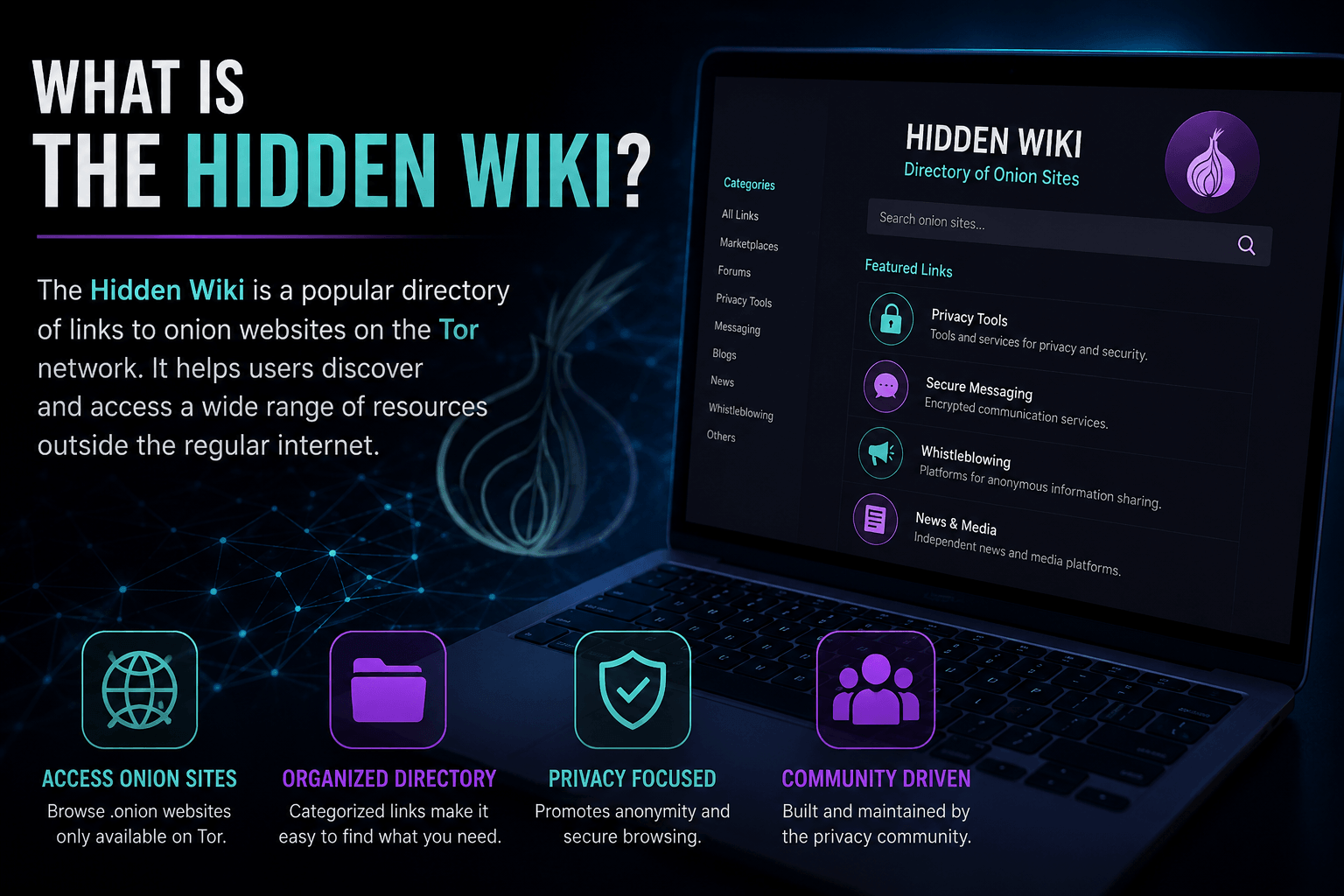
The Hidden Wiki is a well-known directory that helps users discover resources available on the Tor network. Unlike traditional websites that use standard domain names such as .com or .org, many Tor-based websites use special onion addresses that only work through the Tor Browser.
At its core, the Hidden Wiki functions as a collection of categorized links. It aims to organize different types of onion services and make them easier to find. Over the years, many versions of the Hidden Wiki have appeared online. Some remained active for long periods, while others disappeared or moved to new locations.
The directory became popular because the Tor network can be difficult for new users to navigate. On the regular internet, search engines help people find websites in seconds. The Tor ecosystem works differently. Many onion services do not appear in traditional search results, which makes directories an important discovery tool for some users.
The Hidden Wiki gained attention during the early growth of Tor. As more people became interested in online privacy, they searched for ways to explore onion services and learn about the network. The directory often appeared in discussions about privacy-focused browsing and alternative internet technologies.
Today, the Hidden Wiki remains one of the most recognized names associated with the Tor ecosystem. While the directory has changed over time, its role as a starting point for learning about onion services continues to attract interest. For many people, it serves as an introduction to a different side of the internet that operates outside the traditional web.
The Evolution of the Hidden Wiki
The Hidden Wiki has changed significantly since its early days. When the Tor network began attracting more users, finding onion websites was often difficult. Unlike the traditional web, there were no major search engines dedicated to indexing every onion service. As a result, directories became an important way for users to discover resources within the network.
During the growth of Tor, the Hidden Wiki emerged as one of the most recognized directory projects. It provided organized collections of links and helped newcomers explore different parts of the Tor ecosystem. As interest in online privacy increased, more people began searching for information about onion services. This growing audience contributed to the popularity of the Hidden Wiki and similar directories.
Over time, the situation became more complex. Different groups created their own versions of the Hidden Wiki, and many mirrors appeared across the network. Some directories remained active for years, while others disappeared, moved, or changed ownership. Because onion addresses can change and websites often come and go, maintaining a single directory proved challenging.
This history explains why confusion still exists today. Many users search for “the Hidden Wiki” as if it refers to one official website. In reality, the term has been associated with multiple versions and mirrors over the years. Some directories share similar names, while others offer different collections of links and resources.
Despite these changes, the Hidden Wiki remains an important part of Tor’s history. Its evolution reflects the growth of privacy-focused technologies and the ongoing effort to make onion services easier to discover. Understanding this history helps explain why the term continues to attract attention in 2026.
Why People Still Search for the Hidden Wiki
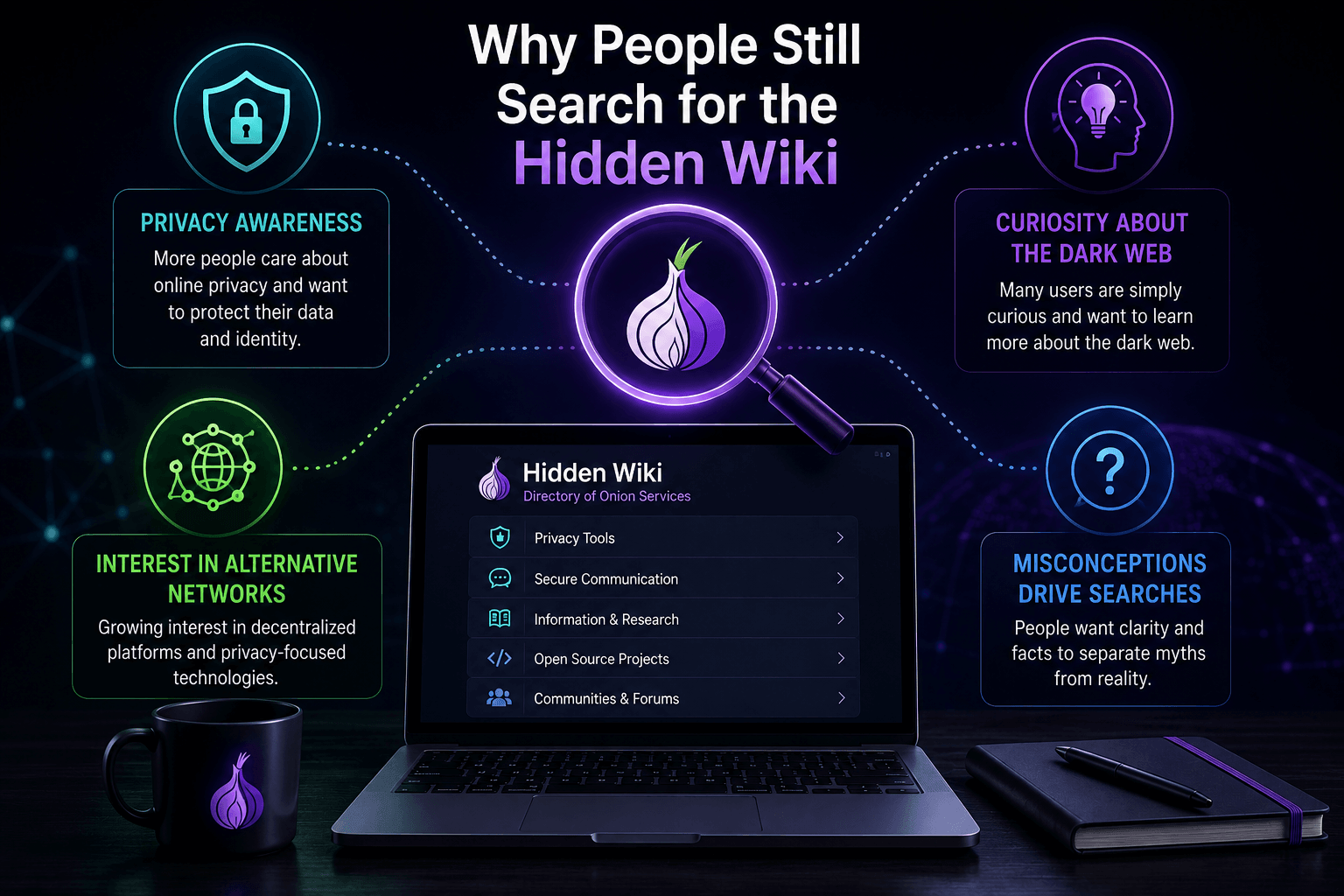
Even in 2026, the Hidden Wiki remains one of the most searched terms associated with the Tor network. While the internet has evolved significantly over the years, interest in privacy-focused technologies continues to grow. This trend helps explain why people still look for information about the Hidden Wiki and its role within the Tor ecosystem.
One major reason is increased privacy awareness. Many internet users now understand how websites, advertisers, and online platforms collect data. As concerns about tracking and digital privacy grow, more people begin researching privacy-focused tools and services. During that process, they often encounter discussions about Tor and the Hidden Wiki. Readers who want a deeper understanding of how online tracking works can explore the topic in more detail.
Curiosity also plays an important role. The dark web has been the subject of countless news stories, documentaries, and online discussions. Many people search for the Hidden Wiki simply because they want to learn more about a topic they have heard about but do not fully understand. In most cases, their goal is education rather than participation.
Another factor is the growing interest in alternative networks and decentralized technologies. People are exploring new ways to communicate, share information, and access services outside traditional platforms. This broader interest in privacy and digital independence often leads users to research onion services and the resources connected to them.
The Hidden Wiki remains relevant because it sits at the intersection of these trends. It represents a well-known part of the Tor ecosystem and continues to attract attention from people who want to better understand privacy-focused technologies and the evolution of the modern internet.
Common Misconceptions About the Hidden Wiki
Despite its popularity, many people misunderstand what the Hidden Wiki actually is. Years of online discussions, outdated information, and sensational media coverage have created several misconceptions that continue to circulate today.
One common myth is that the Hidden Wiki is a single official website. In reality, the term has been associated with multiple versions, mirrors, and directory projects over the years. Different versions have appeared at different times, which often causes confusion among new users.
Another misconception is that the Hidden Wiki represents the entire dark web. The Tor ecosystem contains countless onion services, communities, and resources. No single directory can fully represent everything available within that environment.
Some people also assume that every link listed in a directory is trustworthy. Like any online resource, directories can contain outdated information, inactive websites, or links that no longer serve their original purpose. Users should always verify information and exercise caution when exploring unfamiliar websites.
A final misconception involves privacy itself. Some people believe that simply using privacy-focused tools guarantees complete anonymity. In reality, privacy depends on many factors, including user behavior, software configuration, and overall security practices.
Understanding these misconceptions helps create a more balanced view of the Hidden Wiki. Rather than viewing it through myths or internet rumors, readers can better understand its historical role and its place within the broader Tor ecosystem.
The Hidden Wiki and the Modern Tor Ecosystem
To understand the Hidden Wiki in 2026, it is important to look beyond the directory itself. The Hidden Wiki exists within a much larger ecosystem built around privacy, security, and open access to information. This ecosystem continues to evolve as more people become interested in protecting their digital footprint.
At the center of this ecosystem is the Tor Browser. The browser allows users to access onion services while helping reduce certain forms of online tracking. Over the years, Tor has become one of the most recognized privacy-focused technologies on the internet. Millions of people use it for research, communication, and accessing information.
Onion services are another important part of the Tor network. These websites and services use special .onion addresses that work through Tor. They support a wide range of purposes, including privacy-focused communication platforms, educational resources, and independent publishing projects. Their goal is not simply to provide anonymity but also to offer alternative ways to share and access information online.
The Tor ecosystem also benefits from a strong open-source community. Developers, researchers, and privacy advocates regularly contribute to projects that improve security and transparency. Because the software is open source, anyone can review the code, suggest improvements, and help strengthen the network.
Many privacy-focused projects work alongside Tor as well. Secure messaging apps, encrypted email services, and privacy education initiatives all contribute to a broader movement that promotes digital privacy and user control. If you are interested in learning more about protecting your personal information online, our guide to digital privacy beyond VPNs and Tor explores additional tools and strategies.
The Hidden Wiki remains relevant because it connects to this larger ecosystem. Understanding that connection provides a clearer picture of why privacy-focused technologies continue to matter in today’s internet.
What the Future Could Look Like
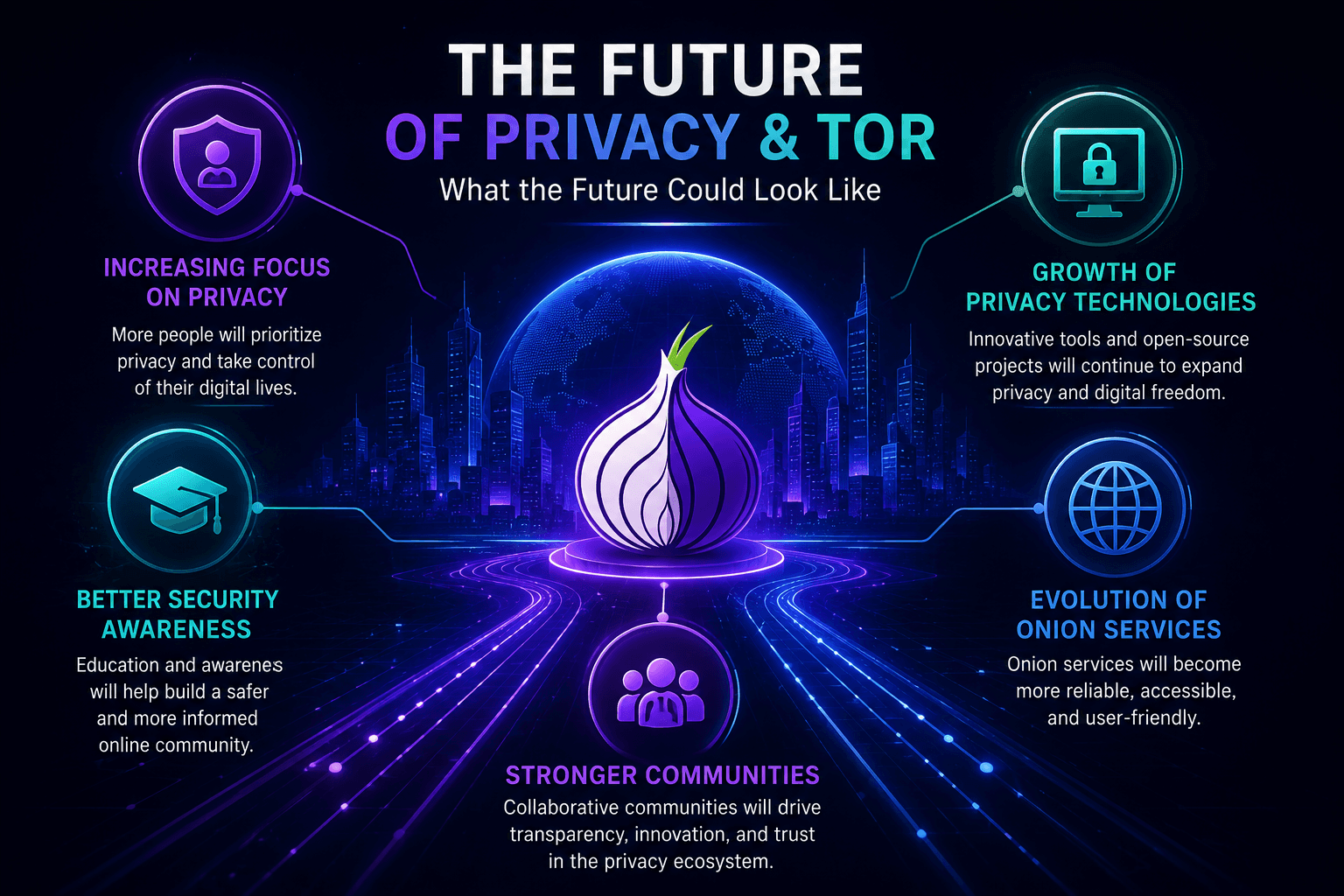
The future of the Hidden Wiki will likely reflect broader trends in online privacy and digital security. As people become more aware of how their data is collected and used, interest in privacy-focused technologies continues to grow. This shift has encouraged more users to learn about tools and platforms that offer greater control over personal information.
Security awareness has also improved in recent years. More internet users now understand the importance of strong passwords, encrypted communication, and safe browsing habits. Educational resources, privacy advocates, and technology communities have helped make these topics easier to understand. As a result, discussions about privacy are becoming more mainstream. Following proven online privacy best practices remains one of the most effective ways to strengthen personal security online.
At the same time, privacy-focused technologies continue to evolve. Developers are building new tools that prioritize transparency, user control, and data protection. Open-source projects remain at the center of this movement, allowing communities to collaborate and improve software through public review and testing. Many organizations also publish privacy research and educational resources that help users better understand digital rights, security, and online privacy.
Onion services are evolving as well. Many modern projects focus on reliability, accessibility, and user experience. While the technology behind these services continues to improve, the goal remains the same: providing alternative ways to access information and communicate online.
The Hidden Wiki may continue to change alongside these developments. New directories, privacy projects, and community resources will likely emerge over time. However, the growing interest in privacy and digital freedom suggests that people will continue searching for information about the Tor ecosystem and the tools that support it. Understanding these technologies will remain valuable as the internet continues to evolve.
Final Thoughts
The Hidden Wiki has remained a recognizable part of the Tor ecosystem for many years. Although different versions and mirrors have appeared over time, the name continues to attract interest from people who want to learn about onion services, privacy-focused technologies, and alternative parts of the internet.
Its lasting relevance comes from more than its role as a directory. The Hidden Wiki has become a familiar reference point in discussions about online privacy and the evolution of the web. For many users, it serves as an introduction to broader topics such as digital security, open-source software, and privacy-conscious browsing.
Understanding the technology behind the Hidden Wiki is often more valuable than focusing on any single website or directory. Learning how Tor works, how onion services operate, and how privacy tools protect users can provide a clearer understanding of today’s digital landscape.
As interest in privacy continues to grow, informed exploration becomes increasingly important. Taking the time to learn from reliable sources, practicing safe browsing habits, and approaching new technologies with curiosity can help users make better decisions online. In that sense, the Hidden Wiki remains an interesting topic not because of what it contains, but because of what it represents within the wider world of internet privacy.
The post Hidden Wiki 2026: What It Is and Why It Still Matters appeared first on Hidden Wiki - Top Dark Web Links & Onion Sites (2026).
]]>The post Digital Privacy 2025: What Protects You Beyond VPN & Tor appeared first on Hidden Wiki - Top Dark Web Links & Onion Sites (2026).
]]> What Digital Privacy Really Means in 2025
In 2025, “digital privacy” is no longer just hiding an IP address or clearing cookies. It’s the full spectrum of how your identity, behavior, and data move across networks, apps, and devices—and who gets to see, store, and profit from that information. Modern privacy spans three intertwined layers: identity protection (minimizing what uniquely identifies you across contexts), data control (governing what is collected, where it goes, and how long it stays), and user rights (legal and practical mechanisms to access, delete, export, and restrict data). The old model focused on obfuscation (e.g., VPN, Tor). The new model emphasizes governance and minimization: collecting less by default, encrypting end-to-end, compartmentalizing identities, and making data flows auditable.
Crucially, privacy now recognizes that metadata—timestamps, device traits, location patterns, interaction graphs—can reveal more than content. A message may be encrypted, yet the who/when/where can still map your life. Privacy also means resilience against profiling: reducing fingerprinting, limiting cross-app identifiers, and using privacy-preserving analytics. Just as important is consent with consequences: informed choices backed by real controls (like revoking app permissions) and enforceable rights (like deletion and portability). Finally, digital privacy has become contextual. You might share more in a work context, less in a health context, and almost nothing in a political context—privacy tools should adapt to each. In short, 2025 privacy shifts from a single “mask” to a system of selective visibility, putting you in charge of what’s seen, inferred, and retained about you.
 From Anonymity to Digital Ownership
A decade ago, privacy advice often began and ended with “use a VPN” or “browse via Tor.” Those tools still matter, but they solve only part of the puzzle: network-level exposure and IP-based tracking. In 2025, the target has moved. Trackers build cross-context profiles from logins, device traits, and behavioral patterns; cloud services retain vast histories; and AI systems mine everything for prediction. The response is a shift from mere anonymity toward digital ownership—controlling not only who sees you now but who controls your data later.
Digital ownership centers on three practices. First, compartmentalization: separate identities for work, personal, finance, research—each with distinct emails, browsers/containers, and app permissions. This stops one context from bleeding into another. Second, data minimization and provenance: only share what’s necessary, keep local copies when possible, encrypt by default, and know where your data lives and travels (cloud logs, backups, third-party processors). Third, revocable trust: use services and protocols that let you revoke access, rotate identifiers, and export or erase data without friction. Tools like encrypted DNS, passkeys, hardware security keys, containerized browsers, and privacy-preserving analytics support this model.
Ownership is also lifecycle-aware. It’s not enough to hide today; you must constrain retention and reuse tomorrow. That means setting deletion schedules, disabling unnecessary telemetry, and preferring providers with transparent retention policies. The goal isn’t to vanish; it’s to decide what’s visible, for how long, and to whom—turning privacy from a static disguise into an ongoing, controllable contract.
 Why Privacy Became a Mainstream Concern
Privacy moved from niche to mainstream because the stakes—and the scale—exploded. AI data scraping and large-scale aggregation made it trivial to collect, correlate, and infer sensitive traits from public posts, purchase histories, location pings, and leaked datasets. Even innocuous breadcrumbs—time of activity, typing cadence, Bluetooth beacons—feed models that predict identity, preferences, and vulnerabilities. Meanwhile, smart devices multiplied sensors in our pockets, homes, cars, and workplaces. Microphones, cameras, accelerometers, and GPS stream constant context; companion apps often transmit telemetry by default. What used to be “online behavior” is now ambient life data.
Economically, surveillance capitalism aligned incentives against privacy: platforms profit by maximizing engagement and ad targeting, which rewards profiling and retention. Technically, fingerprinting matured beyond cookies, using fonts, GPU quirks, network timing, and behavior to create resilient IDs. Socially, privacy risks are no longer abstract: identity theft, doxxing, deepfakes, location stalking, and discriminatory decision systems have turned privacy into personal safety. Regulators responded with new rights frameworks, but enforcement lags innovation, so individuals and businesses must act proactively.
All of this explains the 2025 pivot from single tools to privacy stacks: hardened browsers with isolation containers; encrypted DNS and relays; E2E messaging and email; local AI that filters outbound data; strict permission hygiene; passkeys and hardware keys; and account-level policies that cap retention and disable cross-site tracking. Privacy is now a baseline expectation for consumers, a compliance necessity for organizations, and a competitive advantage for products that make protection simple by design.
 Why VPNs and Tor Alone Are No Longer Enough
For years, VPNs and Tor were the gold standards of online anonymity. They hid IP addresses, encrypted data, and routed traffic through secure channels — but in 2025, those protections only cover a small part of the privacy landscape. Modern tracking no longer depends on where you connect from; it depends on how you behave, what device you use, and what metadata leaks along the way.
Search engines, advertising networks, and analytics platforms now deploy behavioral fingerprinting and AI-based profiling that render older privacy tools partially obsolete. Even when your IP is masked, your browser’s configuration, system clock, GPU signature, and browsing rhythm can still uniquely identify you. Tor and VPNs protect your transport layer, but not your device fingerprint or metadata trail.
This doesn’t mean they’re useless — they remain essential for encrypting data and bypassing censorship — but they’re no longer enough to guarantee true anonymity. Privacy in 2025 requires a layered defense that combines transport encryption with browser isolation, data minimization, AI-assisted privacy filters, and decentralized identity systems that reduce traceable footprints at every level.
 The Fingerprinting Problem
The web today is fingerprint-hungry. Even without cookies, websites identify users through a blend of hardware and behavioral attributes. These include your operating system version, browser type, time zone, installed fonts, screen resolution, GPU details, and even the speed at which you scroll or move your mouse. Each of these factors might seem harmless, but combined, they form a unique fingerprint — a statistical signature that follows you across websites, even if your IP changes.
Advanced fingerprinting now utilizes behavioral analytics to refine identity verification. AI models learn your typing cadence, scrolling habits, click timing, and even the pressure on touchscreens. These micro-patterns are as distinctive as a digital “handwriting sample.” The problem for VPN and Tor users is that while these tools hide where you connect from, they can’t hide how you interact with the web.
To reduce exposure, privacy experts recommend using anti-fingerprinting browsers like Brave, LibreWolf, or Firefox with strict containerization, along with extensions that randomize or block script-based fingerprints. Virtual machines and temporary browser containers add extra protection by creating fresh digital identities each session. In 2025, true privacy means blending in, not standing out — appearing statistically ordinary rather than uniquely anonymous. You can read more about browser-level privacy strategies from Mozilla’s Privacy & Security Blog.
 Metadata — The Invisible Threat
If fingerprinting identifies you by pattern, metadata tracks you by context. Metadata is the “data about data” — timestamps, file sizes, device IDs, network latency, location pings, and communication timing. Even when the message content is encrypted (as it is with VPNs or Tor), these byproducts of communication remain visible to servers and network observers.
For example, an encrypted chat reveals when you messaged, how long you typed, who you talked to, and how often you connect. When cross-referenced with public patterns — like your usual sleep cycle or travel route — metadata can accurately infer identity. Governments and data brokers exploit this to map “social graphs” of interaction, identifying individuals within anonymous groups simply by analyzing timing and connection overlaps.
The most effective defenses now focus on metadata minimization: tools that pad communication with random delays, reroute packets through unpredictable paths, and obfuscate size and timing correlations. Some modern messengers, like Session and SimpleX, employ “unlinkable routing”, ensuring each hop knows only the previous and next node, not the sender or recipient.
For Tor and VPN users, that means privacy extends beyond encryption. You must also hide the shape of your activity — your rhythms, frequencies, and metadata signatures. In 2025, privacy is no longer just about hiding content. It’s about erasing the invisible shadows that your digital behavior leaves behind. For practical tips on safeguarding your online activity, visit the EFF’s Surveillance Self-Defense Guide.
 Emerging Privacy Tools That Go Beyond VPNs
VPNs and Tor are still useful, but 2025 has brought a wave of new privacy technologies that go much further. These tools protect more than your connection — they guard your identity, metadata, and digital behavior. They don’t just hide; they reshape how data is stored, shared, and verified. The focus is no longer on escaping detection but on owning your privacy through transparent, user-controlled systems.
Today’s privacy stack combines decentralized identity systems, encrypted communication layers, and AI-driven protection. Together, they reduce exposure across every step — from login to browsing to app use. Let’s explore three major technologies now defining the next generation of online privacy.
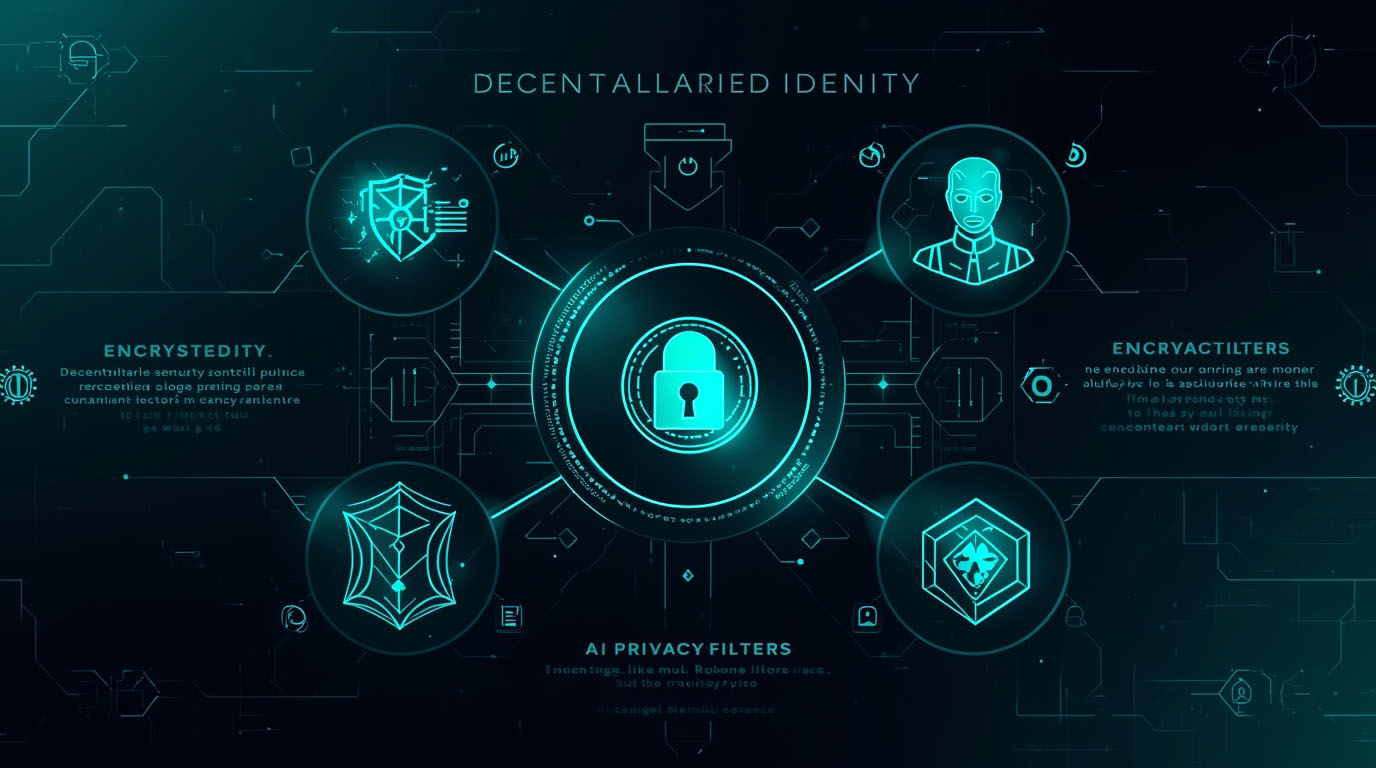
 Decentralized Identity (DID) Systems
Decentralized identity, or DID, allows you to prove who you are without revealing personal data. Instead of handing over details like your name, email, or ID to every site, you verify through blockchain-based credentials that confirm facts without exposing the source.
For example, you can prove you’re over 18 or a verified account holder without showing your date of birth or national ID. The data stays on your device or encrypted on a distributed ledger, not in a central server that could be breached.
DIDs also support self-sovereign identity (SSI) — meaning you own and control your identifiers. Platforms like Microsoft Entra, ION, and SpruceID already offer DID frameworks that link credentials to cryptographic keys. If one app is compromised, your identity elsewhere remains safe.
In 2025, decentralized ID is emerging as a cornerstone of digital privacy. It reduces the attack surface, limits data brokers’ power, and gives users something they’ve rarely had before: control over their digital presence.
 Encrypted DNS and Private Relay
Even with VPNs, many internet providers can still see the domains you visit. That’s where encrypted DNS and private relay systems come in. They hide DNS lookups — the part of your connection that translates a website name into an IP address — by encrypting requests and separating them from your identity.
DNS-over-HTTPS (DoH) and DNS-over-TLS (DoT) prevent third parties from logging your browsing history. Apple’s iCloud Private Relay, introduced in 2022 and refined through 2025, routes your internet requests through two separate relays. One relay knows who you are but not what site you’re visiting, while the other knows what you’re visiting but not who you are.
This dual-layer system ensures that no single party can reconstruct your full browsing activity. Other privacy-focused services, like Cloudflare’s 1.1.1.1 and NextDNS, follow similar principles. These encrypted DNS systems are now a default layer of privacy for browsers and mobile OSs, filling a gap that VPNs left open.
 AI-Based Privacy Filters
Artificial intelligence has become a guardian of privacy, not just a threat to it. In 2025, many users rely on AI-driven privacy assistants that automatically detect and prevent data exposure. These tools analyze patterns in your browsing, emails, and uploads — flagging anything that might leak sensitive information.
For instance, AI filters can detect when you’re about to share personal details (like an address or ID number) on a risky site and warn you in real time. In workplaces, AI monitors outgoing documents for data leaks and redacts confidential information before it leaves the network.
Privacy-first apps like DuckDuckGo Email Protection and Brave’s AI anti-tracking already use similar logic. But newer systems go further: they learn your habits and adapt to your personal privacy threshold.
These AI tools don’t replace VPNs or Tor; they augment them. They give users an active layer of defense that evolves with threats — transforming privacy from something you set once into something that thinks and reacts with you.
 The Role of the Deep Web in Modern Privacy
The deep web once seemed mysterious. In truth, it built many of the privacy ideas we use today. Behind its hidden networks grew the roots of anonymous communication, encrypted routing, and censorship-resistant data storage. Those experiments shaped the privacy movement that now powers the surface web.
Modern tools like secure messaging, decentralized storage, and onion-style routing didn’t appear overnight. They evolved from years of testing on dark-web frameworks. The deep web became a lab for digital freedom, where privacy-by-design replaced trust-based systems.
These technologies still influence 2025 privacy models. The goal has shifted from hiding everything to giving users real control — a lesson first learned from the early Tor community.
 Lessons From Onion Routing
Onion routing began as a way to move data without exposing its path. Each message travels through several volunteer servers. Every layer removes one piece of encryption, revealing only the next step. No single server knows both the sender and the destination.
This layered model inspired how many modern browsers and relays now handle encryption. Even mainstream platforms use multi-hop connections and segmented encryption chains. These ideas ensure that your browsing data can’t be rebuilt by any one observer.
Tor still operates on this principle, but its design now influences everything from VPN chaining to secure relay networks used by major tech companies. It proved that privacy through distribution works better than privacy through secrecy.
If you want to explore the evolution of these ideas, see the detailed overview of dark web websites that shaped online anonymity
The post Digital Privacy 2025: What Protects You Beyond VPN & Tor appeared first on Hidden Wiki - Top Dark Web Links & Onion Sites (2026).
]]>